Turmeric

Herb / Spice

Turmeric

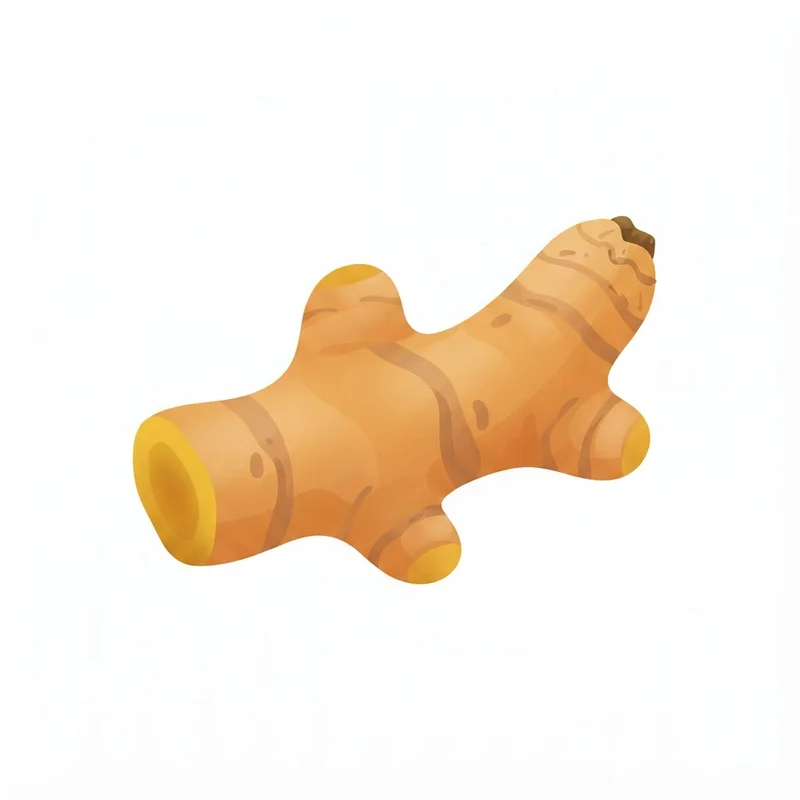
Turmeric is a warm, earthy spice that adds a golden colour and mild flavour to your baby's meals. It contains a natural compound called curcumin, which has been studied for its anti-inflammatory properties that may support a healthy immune system1. A pinch of turmeric can make simple purees more interesting without adding salt or sugar.

PPippin Feeding TeamReviewed by feeding specialists · Updated August 2026
First age6m+
CategoryHerb / Spice
Common allergenNo
Choking riskLow

When can babies eat Turmeric?

You can introduce turmeric around 6 months of age, once your baby is comfortable with single-ingredient purees. Always start with a small pinch mixed into familiar foods.

Storage tip

Store ground turmeric in an airtight container in a cool, dark place; it will keep for up to 3 years. Fresh turmeric root can be refrigerated for up to 3 weeks or frozen for longer.

How to serve Turmeric by age

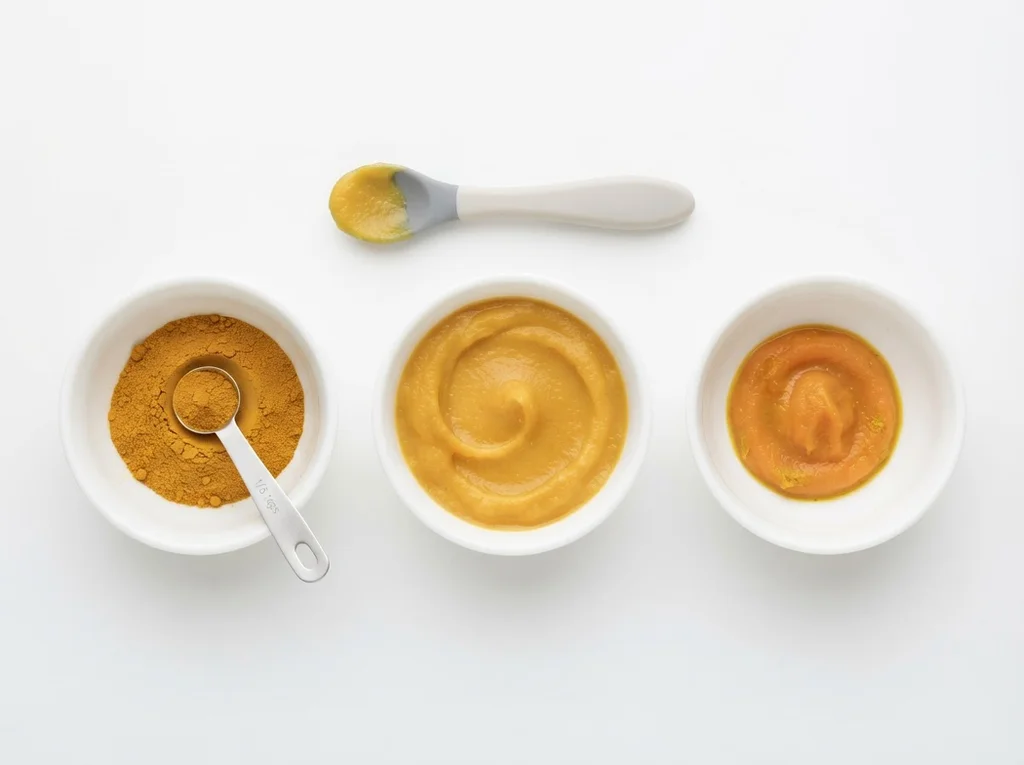
For babies just starting solids, stir 1/8 teaspoon of ground turmeric into smooth purees like sweet potato, carrot, or apple. Mix well to ensure no lumps.6 to 9 months

For babies just starting solids, stir 1/8 teaspoon of ground turmeric into smooth purees like sweet potato, carrot, or apple. Mix well to ensure no lumps.

  • Use a very small amount to avoid overpowering the puree.
  • Mix turmeric with a bit of breast milk or formula to help it blend smoothly.
  • Offer turmeric mixed into a single-ingredient food you've already introduced to check for tolerance.
  • Avoid adding salt or sugar—turmeric alone is enough to enhance flavour.
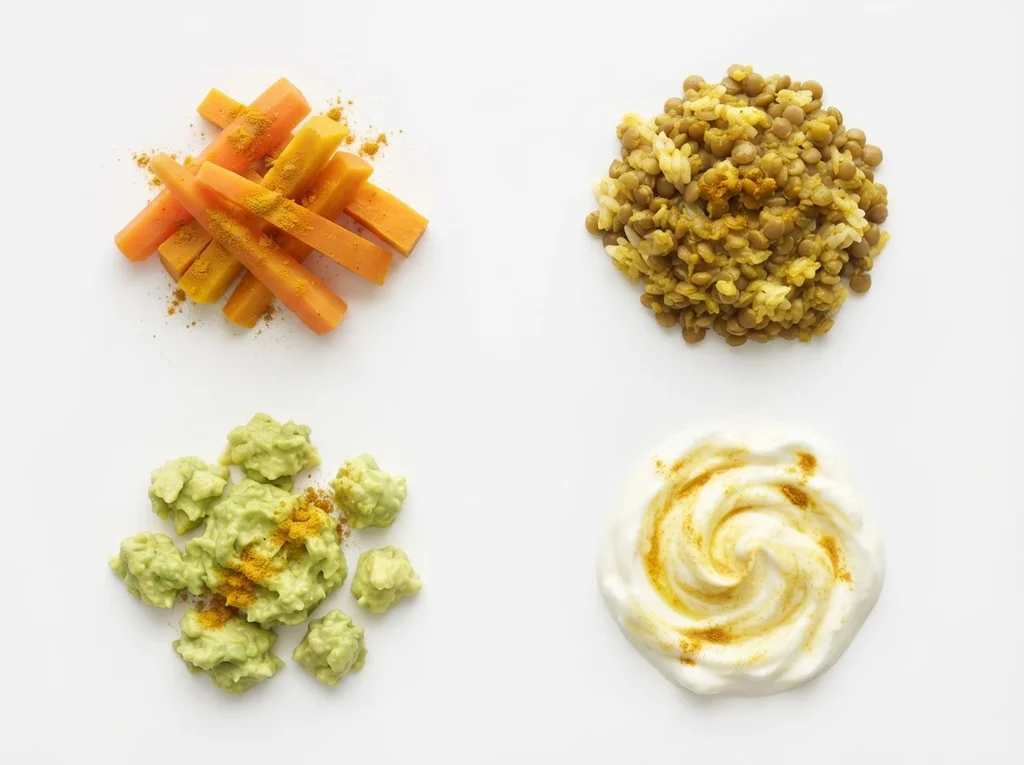
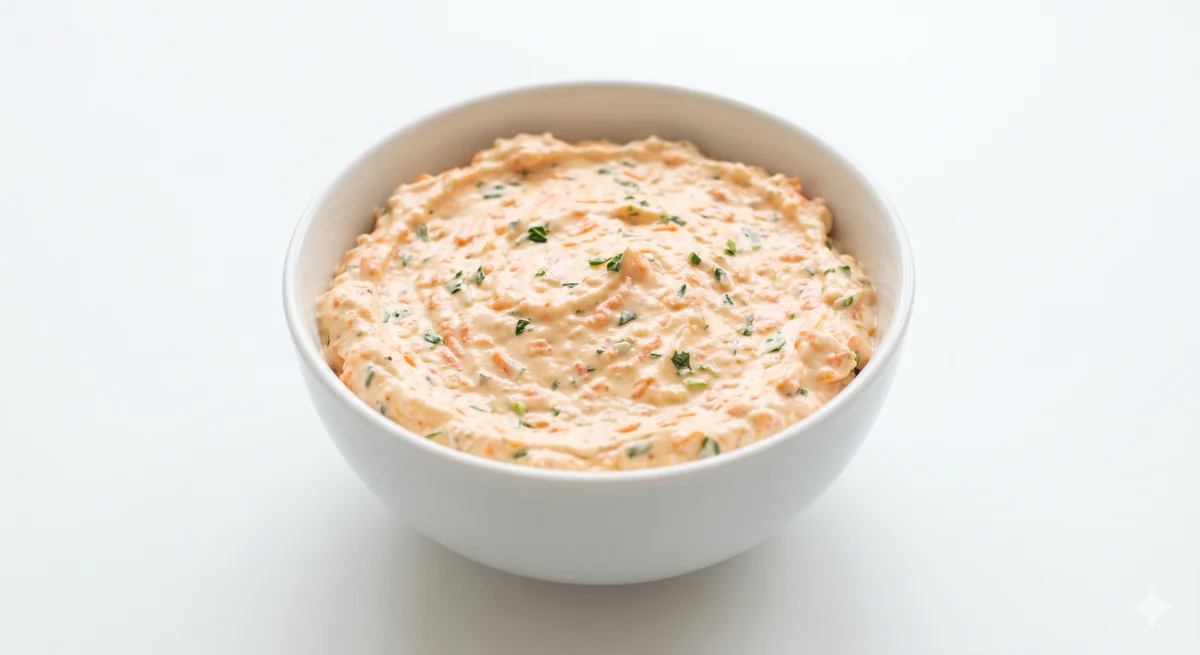
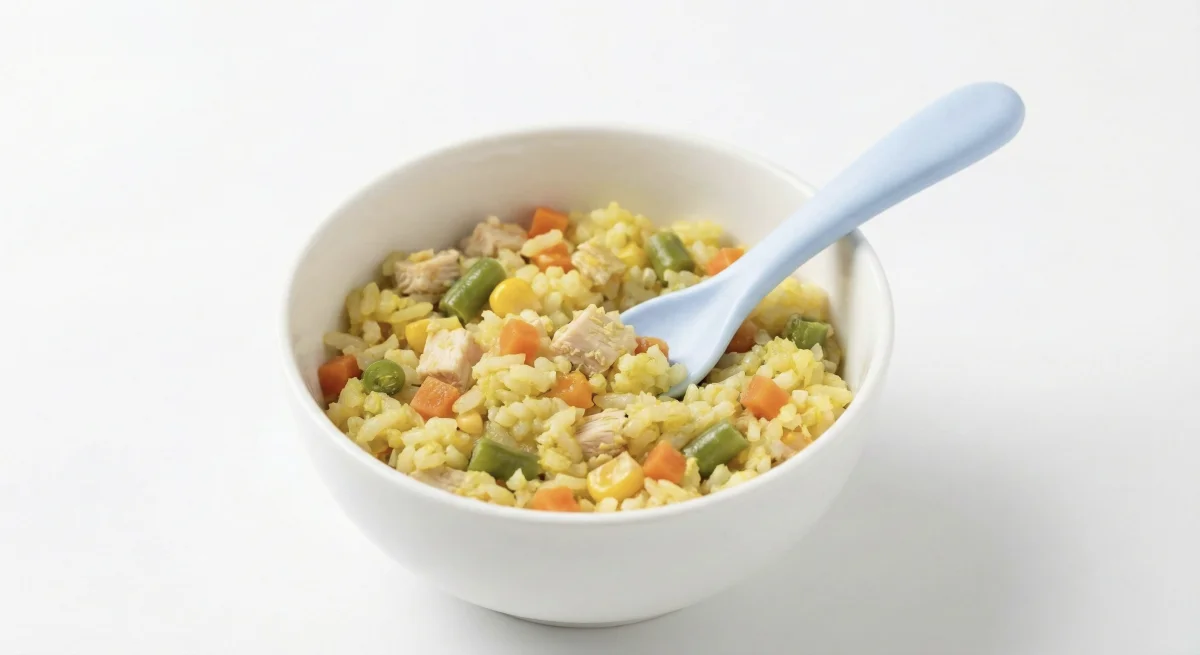
For babies who are exploring more texture, sprinkle turmeric onto soft-cooked vegetables, lentils, or rice that they can pick up. You can also mix it into mashed avocado or yogurt-style dishes.9 to 12 months

For babies who are exploring more texture, sprinkle turmeric onto soft-cooked vegetables, lentils, or rice that they can pick up. You can also mix it into mashed avocado or yogurt-style dishes.

  • Cut soft foods into small pieces about the size of a pea to reduce choking risk.
  • Try combining turmeric with a little olive oil for added healthy fats.
  • Offer turmeric in a variety of dishes to help your baby accept different tastes.
  • If using fresh turmeric, grate it finely and cook lightly to soften.
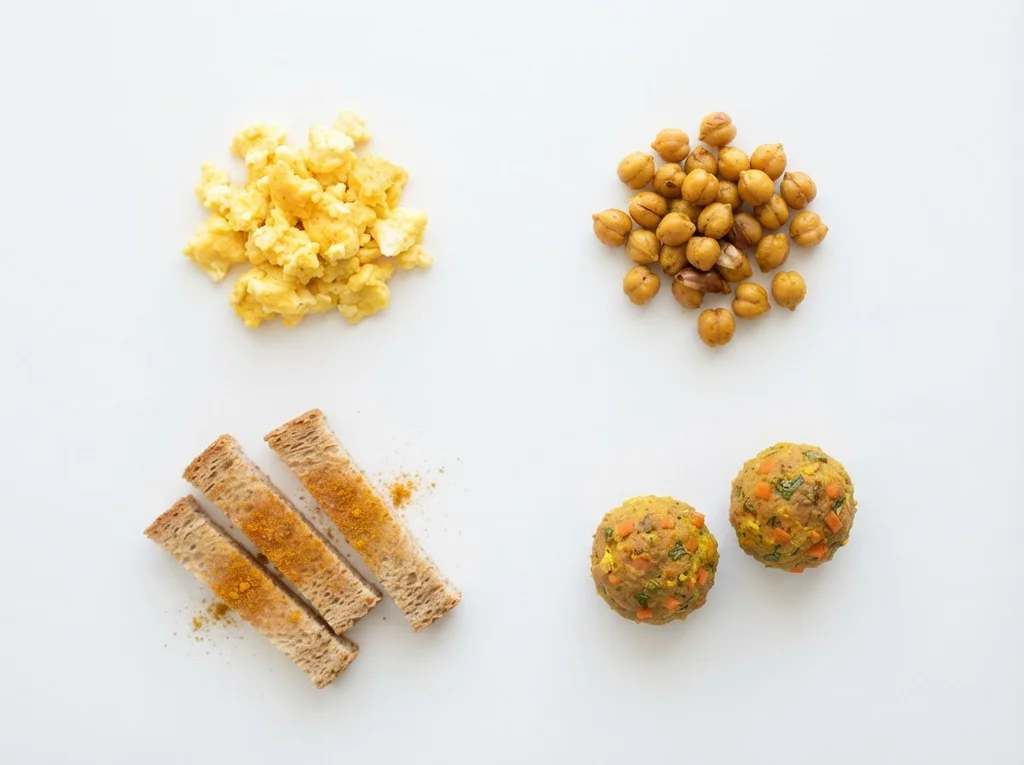
For toddlers, use turmeric as a seasoning on finger foods like roasted chickpeas, scrambled eggs, or whole-grain toast strips. You can also add it to soups, stews, or meatballs.12 months +

For toddlers, use turmeric as a seasoning on finger foods like roasted chickpeas, scrambled eggs, or whole-grain toast strips. You can also add it to soups, stews, or meatballs.

  • Keep seasoning mild—a pinch is enough to flavour a meal.
  • Combine turmeric with black pepper (a tiny amount) to enhance curcumin absorption, but use only a small pinch of pepper for babies3.
  • Serve turmeric with foods containing healthy fats like olive oil or yogurt to improve nutrient uptake4.
  • Introduce turmeric as part of family meals to encourage adventurous eating.

Safety & allergens

Choking risk: Low

Turmeric is a powder or paste, so it doesn't pose a choking risk itself. Make sure it's fully blended into smooth purees without lumps. For older babies, you can sprinkle it on soft finger foods that they can gum easily.

Not a common allergen

Turmeric is not a top allergen. As with any new food, offer it on its own and watch for any reaction.

Vitamins & minerals

Turmeric provides small amounts of iron and manganese, important for growth and development. Its main active ingredient, curcumin, is known for its antioxidant and anti-inflammatory benefits2. While amounts in typical serving sizes are small, adding turmeric to your baby's meals introduces depth of flavour and a touch of nutrition.

Vitamins
Vitamin B6Vitamin C
Minerals
IronManganesePotassium

Nutritional synergy

Pair turmeric with a tiny amount of black pepper to boost curcumin absorption, thanks to a compound called piperine3. Also, serving turmeric with a healthy fat like olive oil can help, since curcumin is fat-soluble4.

Recipes with Turmeric

Pairs well with

Common questions

How much turmeric should I start with?

Start with a small pinch (about 1/8 teaspoon) of ground turmeric mixed into a few tablespoons of your baby's favourite puree. You can gradually increase to 1/4 teaspoon as they get used to the taste.

Can I give turmeric to my baby every day?

Yes, a pinch of turmeric is safe for most babies when mixed into food. Rotate spices to keep meals interesting, and if you have any concerns about daily use, consult your pediatrician.

Is fresh turmeric better than ground?

Both work well! Fresh turmeric has a stronger flavour and needs to be peeled and grated, while ground turmeric is convenient and lasts longer. Whichever you choose, start with a tiny amount to see how your baby responds.

Sources & references

  1. 1Hewlings SJ, Kalman DS. Curcumin: A Review of Its' Effects on Human Health. Foods. 2017;6(10):92.
  2. 2Gupta SC, Patchva S, Aggarwal BB. Therapeutic roles of curcumin: lessons learned from clinical trials. AAPS J. 2013;15(1):195-218.
  3. 3Shoba G, et al. Influence of piperine on the pharmacokinetics of curcumin in animals and human volunteers. Planta Med. 1998;64(4):353-356.
  4. 4Anand P, et al. Bioavailability of curcumin: problems and promises. Mol Pharm. 2007;4(6):807-818.