Miso soup

Bean

Miso soup

Miso soup is a gentle, savory introduction to Japanese cuisine for your little one, offering a unique umami flavor that many babies enjoy. Made from fermented soybeans, it provides probiotics that support a healthy gut microbiome, which is important for digestion and immune function in infants.1 It's also a good source of plant-based protein and essential minerals to support your baby's growth.

PPippin Feeding TeamReviewed by feeding specialists · Updated June 2026
First age6m+
CategoryBean
Common allergenYes
Choking riskLow

When can babies eat Miso soup?

Miso soup can be introduced around 6 months when starting solids, as long as it's prepared safely without added salt or large pieces. Wait until your baby is comfortable with single-ingredient purees first.

Storage tip

Store miso paste in an airtight container in the refrigerator for up to a year. Once made into soup, it keeps in the fridge for 2-3 days; freeze baby portions in ice cube trays for up to 2 months.

How to serve Miso soup by age

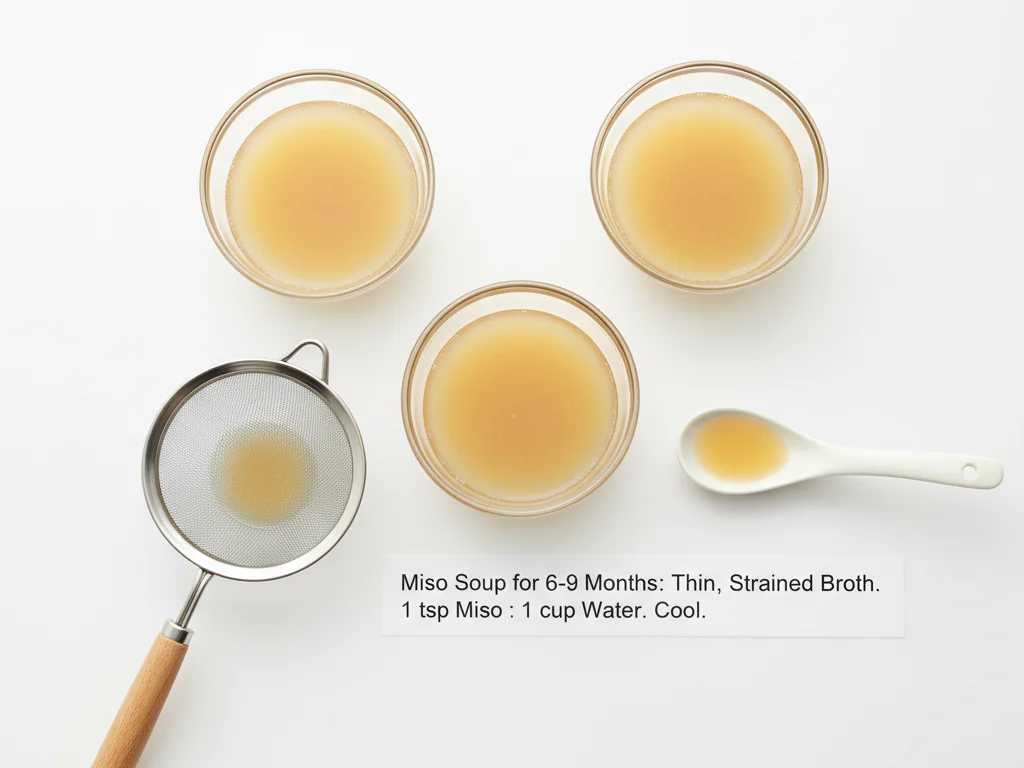
For beginners, serve miso as a thin, strained broth without any solid ingredients. Mix 1 teaspoon of miso paste with 1 cup of warm water, strain through a fine sieve, and offer a few spoonfuls. Ensure it's cooled to room temperature.6 to 9 months

For beginners, serve miso as a thin, strained broth without any solid ingredients. Mix 1 teaspoon of miso paste with 1 cup of warm water, strain through a fine sieve, and offer a few spoonfuls. Ensure it's cooled to room temperature.

  • Use white or yellow miso for milder flavor
  • Strain thoroughly to remove any particles
  • Start with just 1-2 teaspoons per serving
  • Serve in a small spoon or bottle nipple
  • Always test temperature on your wrist first
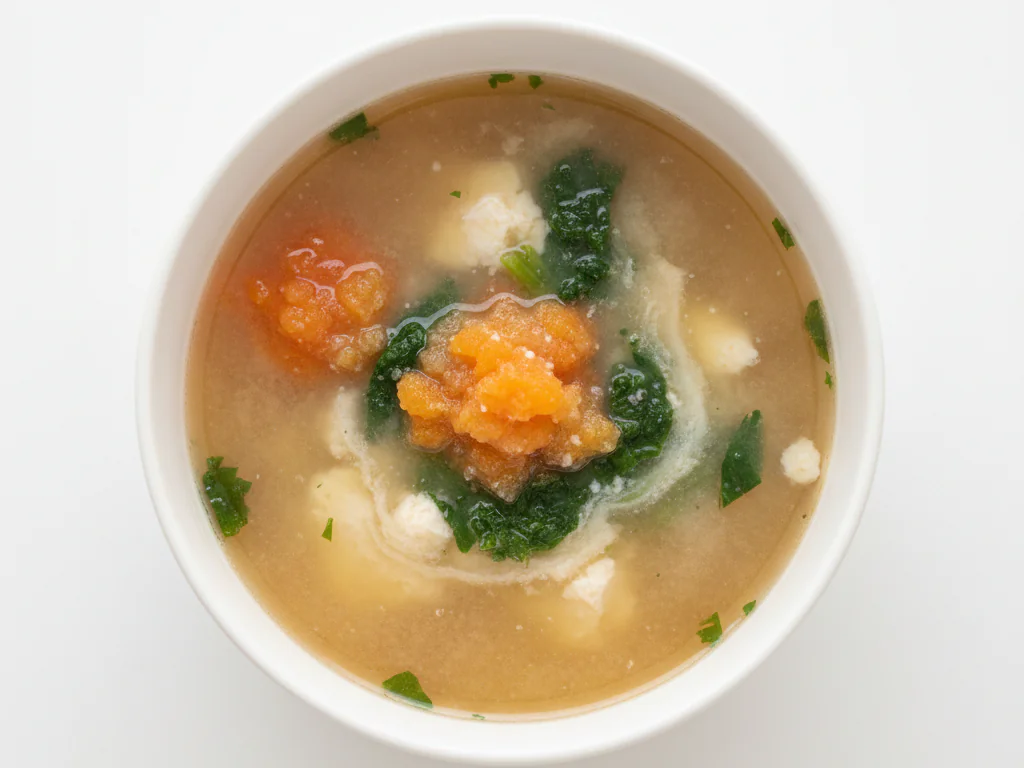
You can add soft, cooked vegetables that have been mashed or finely chopped, like carrot or spinach. Keep the broth thin but with some texture. Tofu can be included if mashed to a paste consistency.9 to 12 months

You can add soft, cooked vegetables that have been mashed or finely chopped, like carrot or spinach. Keep the broth thin but with some texture. Tofu can be included if mashed to a paste consistency.

  • Mash any added vegetables thoroughly
  • Use soft tofu and mash completely
  • Increase to 1-2 tablespoons per serving
  • Mix with oatmeal or rice for thicker texture
  • Watch for any reactions to new ingredients
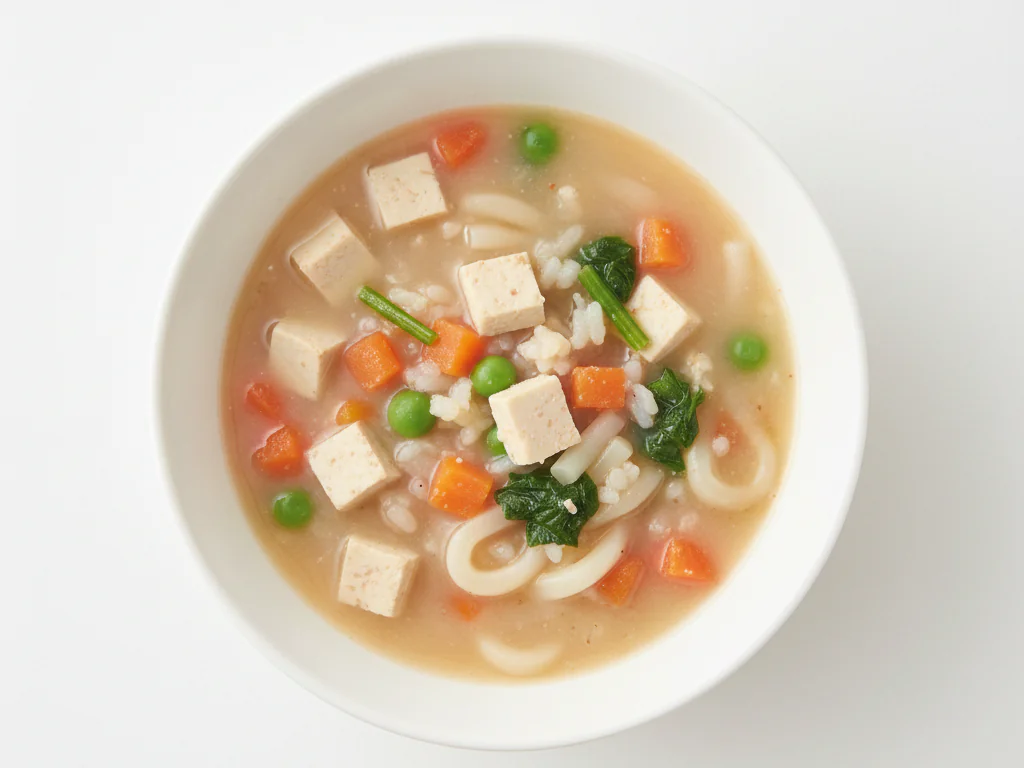
Toddlers can enjoy miso soup with small, soft pieces of tofu, well-cooked vegetables, and even a bit of cooked noodle or rice. The broth can be slightly thicker, but avoid large chunks that could pose choking hazards.12 months +

Toddlers can enjoy miso soup with small, soft pieces of tofu, well-cooked vegetables, and even a bit of cooked noodle or rice. The broth can be slightly thicker, but avoid large chunks that could pose choking hazards.

  • Cut all ingredients into pea-sized pieces
  • Use low-sodium miso paste
  • Include nutrient-rich add-ins like seaweed flakes
  • Serve in a small bowl with a spoon
  • Pair with whole grain crackers or bread

Safety & allergens

Choking risk: Low

Miso soup is generally low-risk when served as a thin broth without solid chunks. Always strain out any tofu cubes, seaweed, or vegetable pieces for babies under 12 months. Serve in a small, shallow spoon or in a sippy cup to prevent gulping.

Common allergen

Introduce on its own and watch closely for any signs of a reaction.

Vitamins & minerals

Miso is rich in probiotics from fermentation, which help maintain a balanced gut flora and may reduce digestive issues like constipation in babies.1 It contains vitamin K for blood clotting and bone health,2 B vitamins for energy metabolism,3 and minerals like copper and manganese that support enzyme function and development.4

Vitamins
Vitamin KVitamin B2Vitamin B3Vitamin B6Vitamin B9
Minerals
SodiumPotassiumMagnesiumCopperManganese

Nutritional synergy

Pair miso soup with vitamin C-rich foods like sweet potato or bell pepper to enhance iron absorption from other ingredients,5 making it a more nutritious meal for your baby.

Pairs well with

Common questions

Is miso soup too salty for babies?

Traditional miso can be high in sodium, but you can make a baby-friendly version by using low-sodium miso paste and diluting it with more water. Avoid adding any extra salt or soy sauce. Start with small amounts (1-2 teaspoons) to monitor tolerance.

Can I use instant miso soup packets?

It's best to avoid instant packets as they often contain high sodium, preservatives, or MSG. Instead, make homemade soup with plain miso paste, water, and soft-cooked vegetables you've already introduced to your baby.

What if my baby doesn't like the taste?

The umami flavor can be strong for some babies. Try mixing a small amount of miso broth into familiar foods like rice cereal or vegetable puree to gradually introduce the taste. It may take several attempts before they accept it.

Sources & references

  1. 1Dimidi et al., 2019
  2. 2NIH Office of Dietary Supplements, 2021
  3. 3Kennedy, 2016
  4. 4USDA FoodData Central, 2024
  5. 5Lynch & Cook, 2010