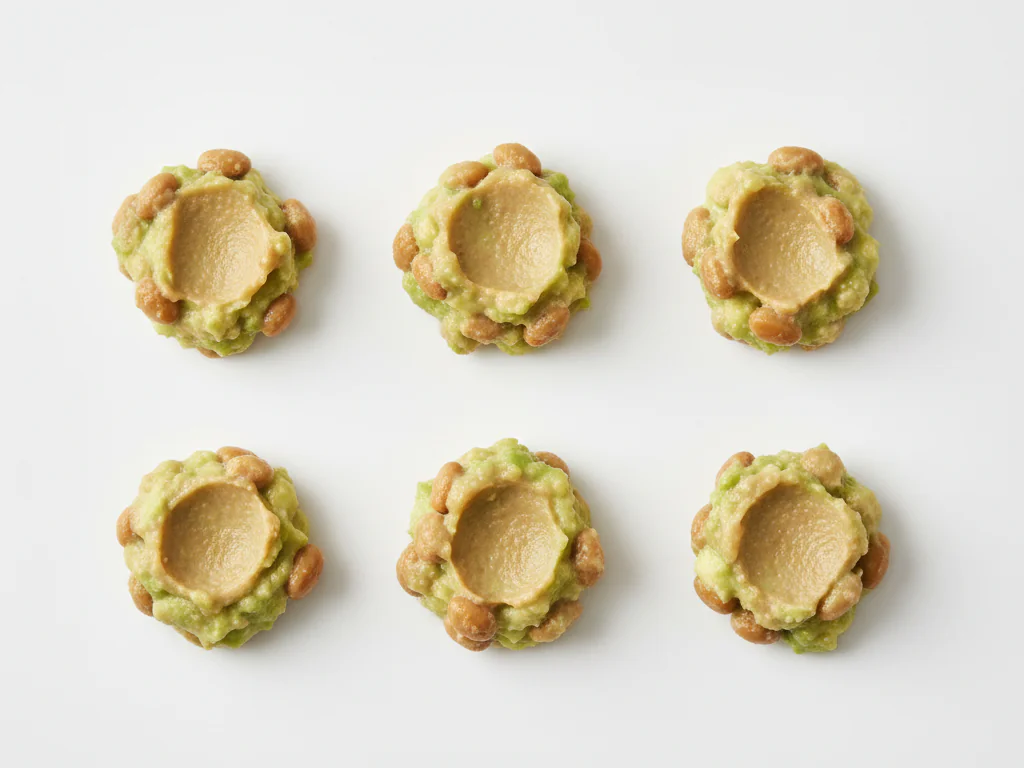
FoodsBeanNatto
Natto

Bean

Natto

Natto is a traditional Japanese fermented soybean dish with a unique sticky texture and savory flavor. It's packed with nutrients that support your baby's growth, including vitamin K2 for strong bones[1] and probiotics that aid digestion[2]. While its texture might be new, many babies enjoy its mild, umami taste when introduced gradually.

6m+Common allergenChoking risk: Low
First age6m+
CategoryBean
Common allergenYes
Choking riskLow

When can babies eat Natto?

You can introduce natto around 6 months when starting solids, as it's soft and easy to mash. It's a great plant-based protein option for babies exploring diverse flavors.

How to serve Natto by age

Mash natto thoroughly until smooth, removing any whole beans. Mix with breast milk, formula, or a soft food like avocado to create a thin puree. Serve small spoonfuls to let your baby explore the texture.
6 to 9 months

Mash natto thoroughly until smooth, removing any whole beans. Mix with breast milk, formula, or a soft food like avocado to create a thin puree. Serve small spoonfuls to let your baby explore the texture.

  • Use a fork to mash natto well
  • Mix with a familiar food to ease introduction
  • Start with a teaspoon-sized portion
  • Ensure no whole beans remain
  • Serve at room temperature
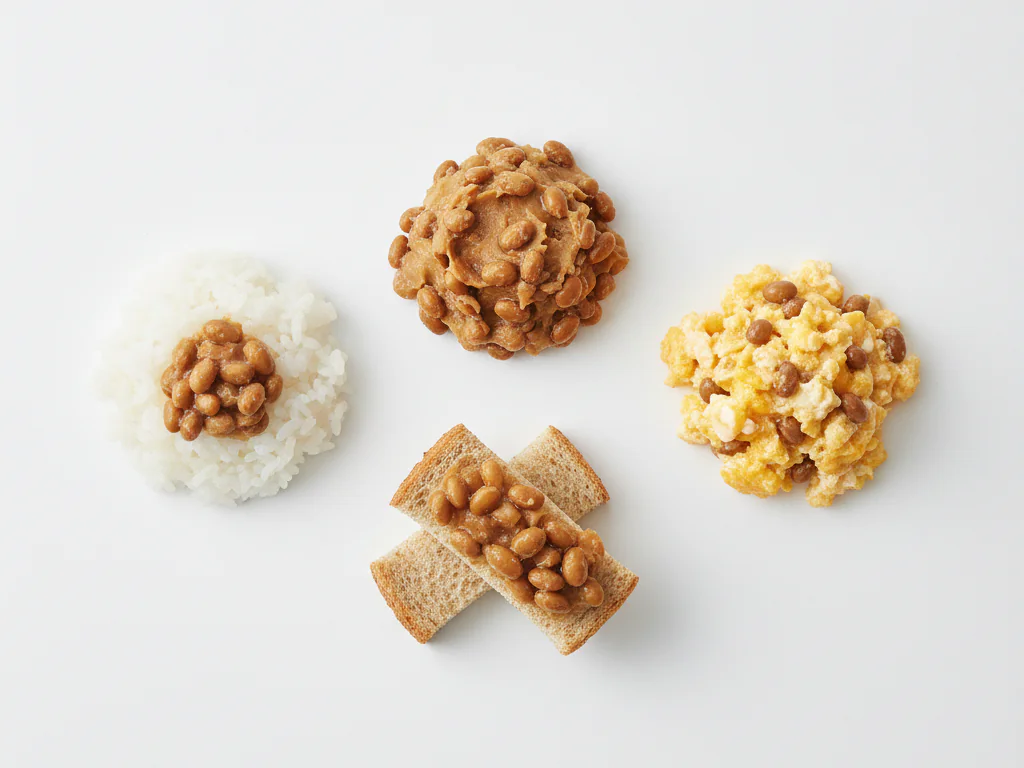
Mash natto slightly but leave some texture for chewing practice. You can mix it with soft-cooked rice, quinoa, or mashed vegetables. Offer as a finger food by spreading on toast strips or mixing into soft scrambled eggs.
9 to 12 months

Mash natto slightly but leave some texture for chewing practice. You can mix it with soft-cooked rice, quinoa, or mashed vegetables. Offer as a finger food by spreading on toast strips or mixing into soft scrambled eggs.

  • Leave small soft lumps for texture
  • Combine with grains for balanced meals
  • Use as a spread on soft foods
  • Encourage self-feeding with pre-loaded spoons
  • Monitor for any texture aversion
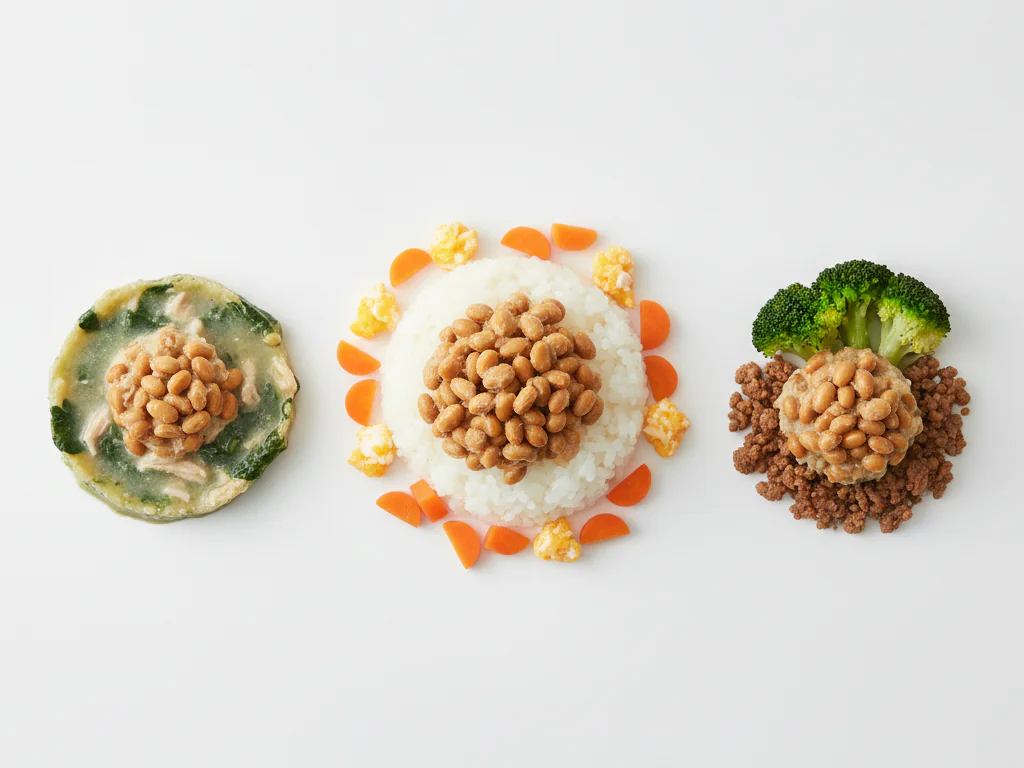
Serve natto as a topping for rice, mixed into soups, or as part of a balanced meal. Toddlers can eat it with minimal mashing, but ensure it's soft and easy to chew. Pair with vegetables or proteins for variety.
12 months +

Serve natto as a topping for rice, mixed into soups, or as part of a balanced meal. Toddlers can eat it with minimal mashing, but ensure it's soft and easy to chew. Pair with vegetables or proteins for variety.

  • Serve as a side dish with meals
  • Mix into noodle or rice dishes
  • Offer with chopsticks or forks for practice
  • Combine with colorful veggies
  • Respect your toddler's preferences if they dislike it

Safety & allergens

Choking risk: Low

Natto is naturally soft and sticky, posing minimal choking risk when served mashed or pureed. For younger babies, ensure it's well-mashed without whole beans. Always supervise your baby during meals.

Common allergen

Introduce on its own and watch closely for any signs of a reaction.

Vitamins & minerals

Natto is rich in vitamin K2, which helps direct calcium to bones for healthy development[1]. Its fermentation produces probiotics that support gut health and digestion[2]. It also provides plant-based iron for energy and growth[3] and calcium for strong teeth and bones[4].

Vitamins
Vitamin VITAMIN K2Vitamin VITAMIN B2Vitamin VITAMIN B6Vitamin VITAMIN B12
Minerals
IronCalciumMagnesiumPotassium

Pairs well with