Udon

Grain

Udon

Udon noodles are a soft, chewy Japanese wheat noodle that can be a fun and gentle introduction to grains for your baby. They're easy to digest and provide a good source of energy from carbohydrates, which helps fuel your baby's growth and development.1 Their mild flavor and soft texture make them appealing for little ones exploring new foods.

PPippin Feeding TeamReviewed by feeding specialists · Updated June 2026
First age6m+
CategoryGrain
Common allergenYes
Choking riskMedium

When can babies eat Udon?

Udon can typically be introduced around 6 months when your baby starts solids, as long as they're prepared safely to minimize choking risk.

Storage tip

Store dried udon in a cool, dry pantry for up to a year. Cooked udon should be refrigerated in an airtight container and used within 3-4 days.

How to serve Udon by age

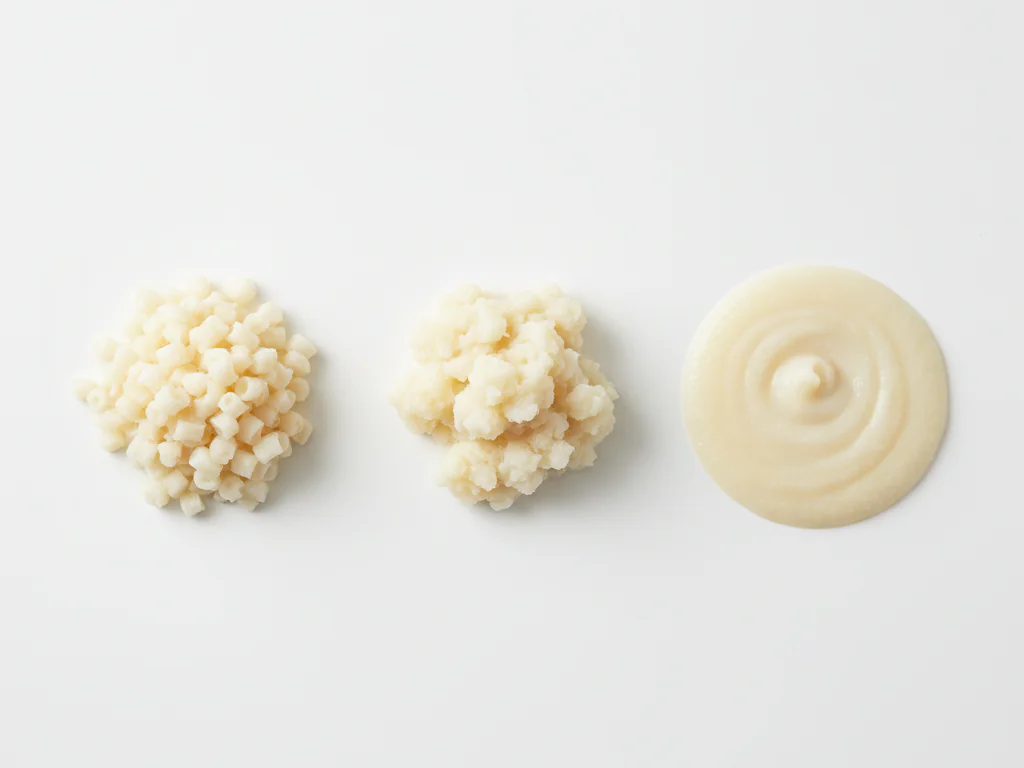
For beginners, cook udon until very soft and cut into tiny pieces (no larger than 1/4 inch). You can also mash or puree it with a little breast milk, formula, or low-sodium broth to create a smoother texture that's easier to swallow.6 to 9 months

For beginners, cook udon until very soft and cut into tiny pieces (no larger than 1/4 inch). You can also mash or puree it with a little breast milk, formula, or low-sodium broth to create a smoother texture that's easier to swallow.

  • Cook until noodles are tender and easily squished between fingers
  • Cut into pea-sized pieces to prevent choking
  • Mix with pureed vegetables for added nutrition
  • Avoid adding salt or soy sauce
  • Serve at room temperature to prevent burns
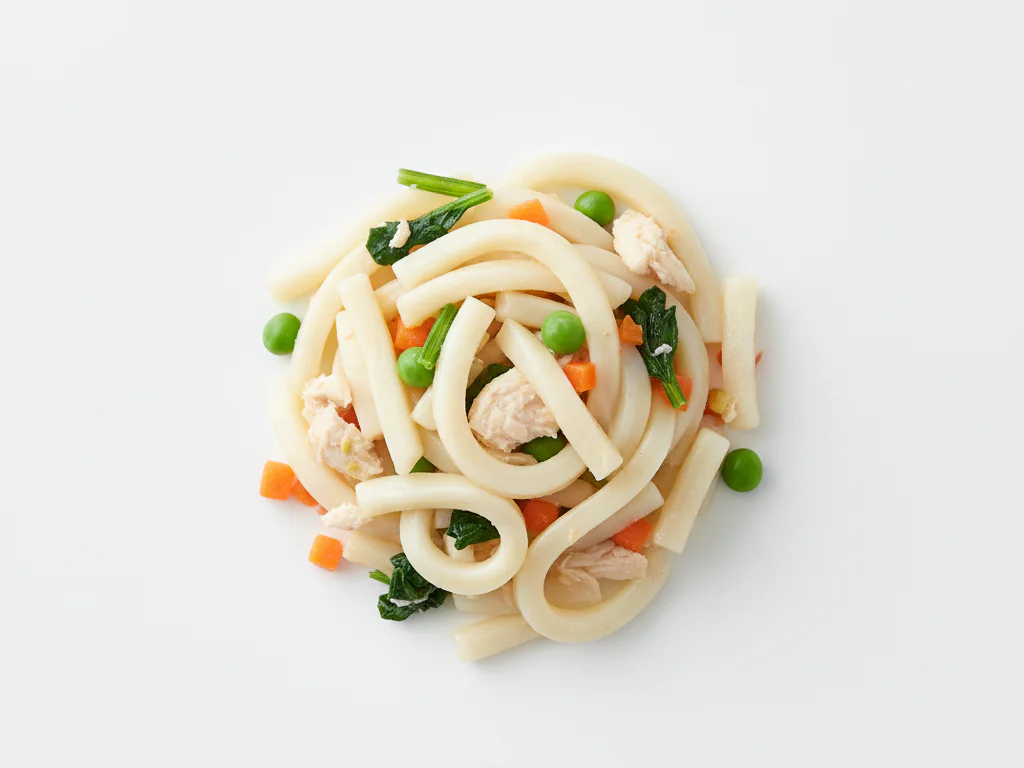
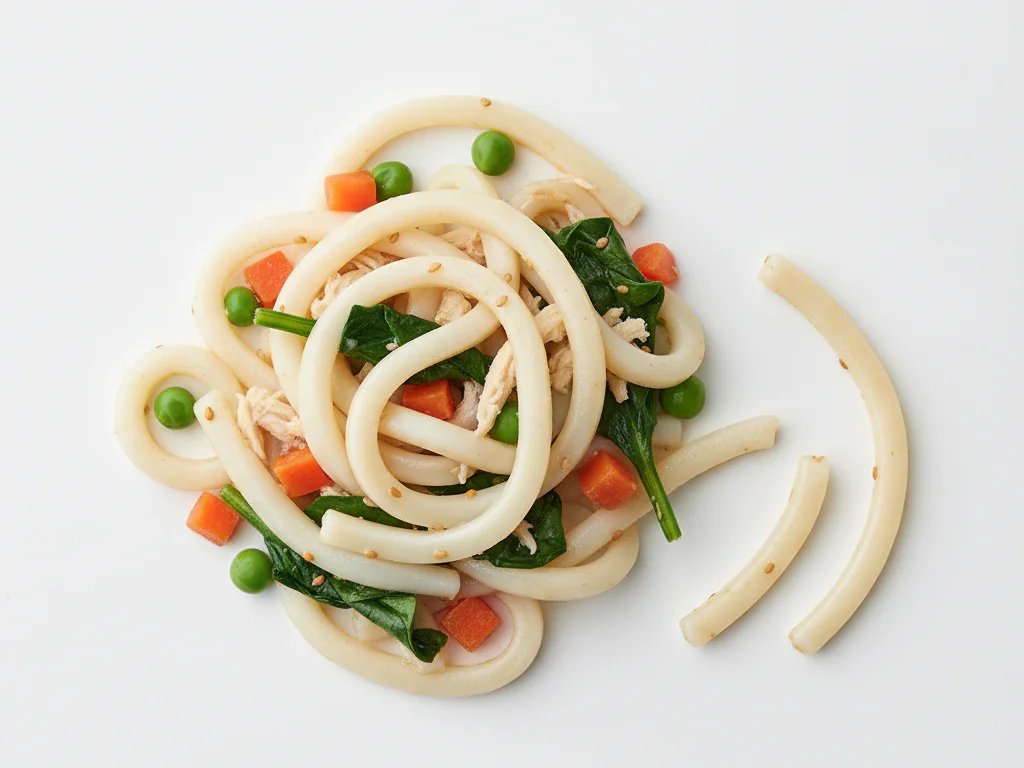
As your baby develops a pincer grasp, cut udon into small, bite-sized pieces (about 1/2 inch long). You can serve it as finger food or mixed with soft vegetables and proteins for a more textured meal.9 to 12 months

As your baby develops a pincer grasp, cut udon into small, bite-sized pieces (about 1/2 inch long). You can serve it as finger food or mixed with soft vegetables and proteins for a more textured meal.

  • Encourage self-feeding by offering pieces on a highchair tray
  • Combine with soft-cooked carrots or peas for color and variety
  • Use as a base for mild broths or sauces
  • Monitor chewing as udon can be gummy
  • Introduce different shapes like small rings or curls
Toddlers can handle longer strands (2-3 inches) that they can slurp or bite. You can incorporate udon into soups, stir-fries with soft vegetables, or cold noodle salads with mild dressings.12 months +

Toddlers can handle longer strands (2-3 inches) that they can slurp or bite. You can incorporate udon into soups, stir-fries with soft vegetables, or cold noodle salads with mild dressings.

  • Involve your toddler in 'helping' to break dry noodles before cooking
  • Add lean proteins like shredded chicken or tofu
  • Experiment with mild flavors like ginger or garlic
  • Teach safe slurping to prevent choking
  • Cut into fun shapes using cookie cutters for picky eaters

Safety & allergens

Choking risk: Medium

Udon noodles can be slippery and chewy, posing a choking risk if served in long strands. Always cut them into small, manageable pieces—no longer than 1/2 inch—and ensure they're cooked until very soft. Supervise your baby closely during meals.

Common allergen

Introduce on its own and watch closely for any signs of a reaction.

Vitamins & minerals

Udon provides B vitamins like thiamine (B1), riboflavin (B2), and niacin (B3), which help support your baby's energy metabolism and nervous system development.2 It also contains minerals like iron, important for healthy blood cells and brain development,3 and magnesium, which aids in bone health and muscle function.4

Vitamins
Vitamin B1Vitamin B2Vitamin B3
Minerals
IronMagnesiumPhosphorus

Nutritional synergy

Pair udon with vitamin C-rich foods like bell peppers or broccoli to enhance iron absorption, as vitamin C helps convert plant-based iron into a form that's easier for the body to use.5

Pairs well with

Common questions

How do I cook udon for my baby?

Cook udon according to package directions until very soft—usually a minute or two longer than recommended for adults. Drain and rinse with cool water to remove excess starch, then cut into small pieces appropriate for your baby's age.

What if my baby gags on udon?

Gagging is a normal reflex as babies learn to handle new textures. Ensure udon is cut small and cooked soft. If gagging persists, try mashing it lightly or offering a thinner version mixed with broth or puree until your baby gets used to it.

Can I use udon in baby-led weaning?

Yes! For baby-led weaning, serve cooked udon cut into short, graspable strips (about 2-3 inches long) that your baby can hold. Make sure it's soft enough to gum easily, and always supervise to prevent choking.

Sources & references

  1. 1American Academy of Pediatrics, 2021
  2. 2National Institutes of Health, 2022
  3. 3Centers for Disease Control and Prevention, 2023
  4. 4National Institutes of Health, 2022
  5. 5Harvard T.H. Chan School of Public Health, 2023