Quinoa

Grain

Quinoa

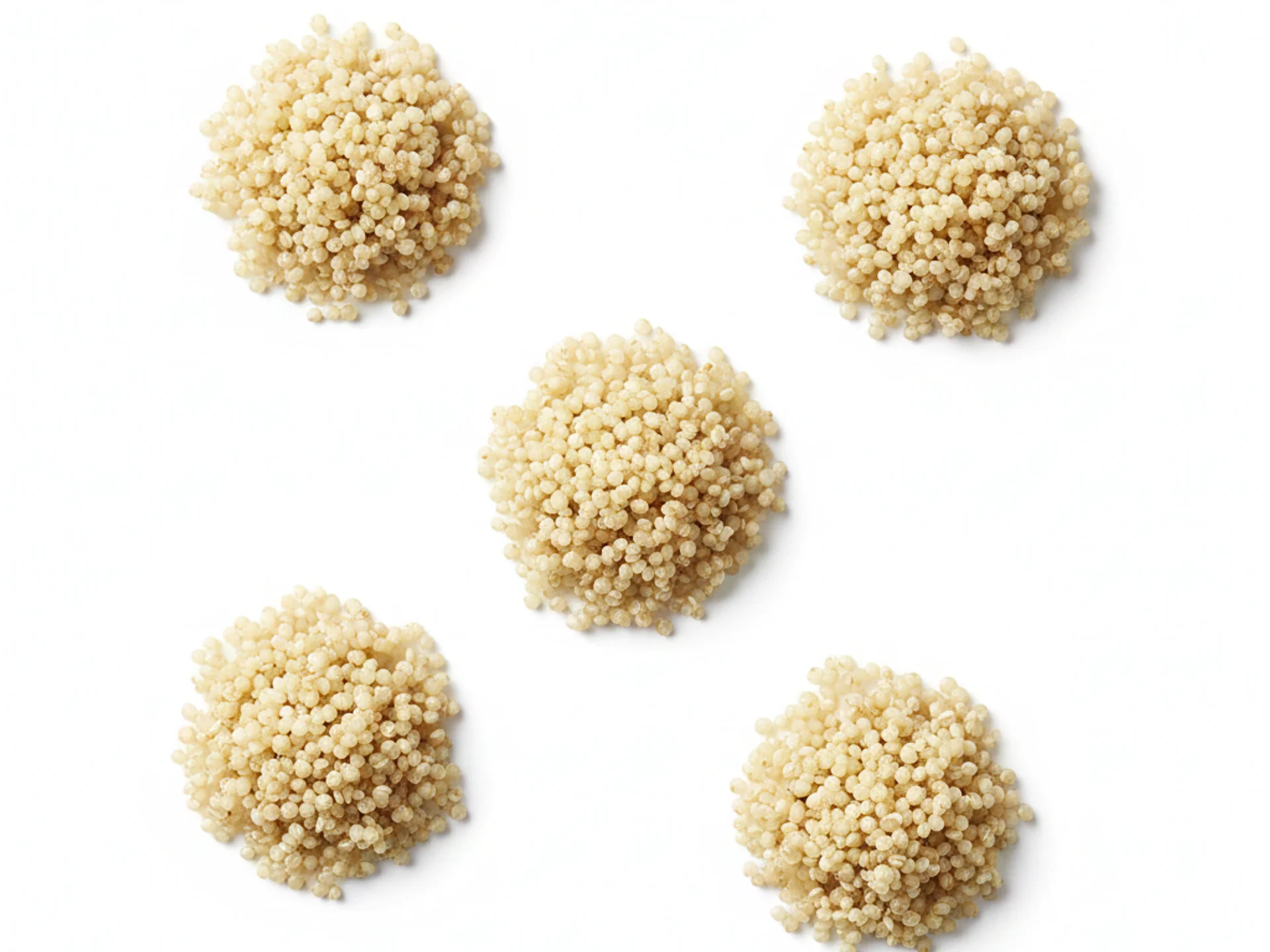
Quinoa is a fantastic first grain for your baby because it's packed with complete protein and essential nutrients that support healthy growth. Its mild, slightly nutty flavor and soft texture when cooked make it easy for little ones to enjoy, and it's naturally gluten-free, which is great for sensitive tummies.

PPippin Feeding TeamReviewed by feeding specialists · Updated January 2026
First age6m+
CategoryGrain
Common allergenNo
Choking riskLow

When can babies eat Quinoa?

You can introduce quinoa around 6 months when your baby starts solids, as it's easy to digest and unlikely to cause allergies. Just make sure to cook it thoroughly and serve it in an age-appropriate texture.

Storage tip

Store uncooked quinoa in an airtight container in a cool, dry place for up to 2 years. Cooked quinoa keeps in the refrigerator for 5-7 days or can be frozen in portion-sized containers for up to 2 months.

How to serve Quinoa by age

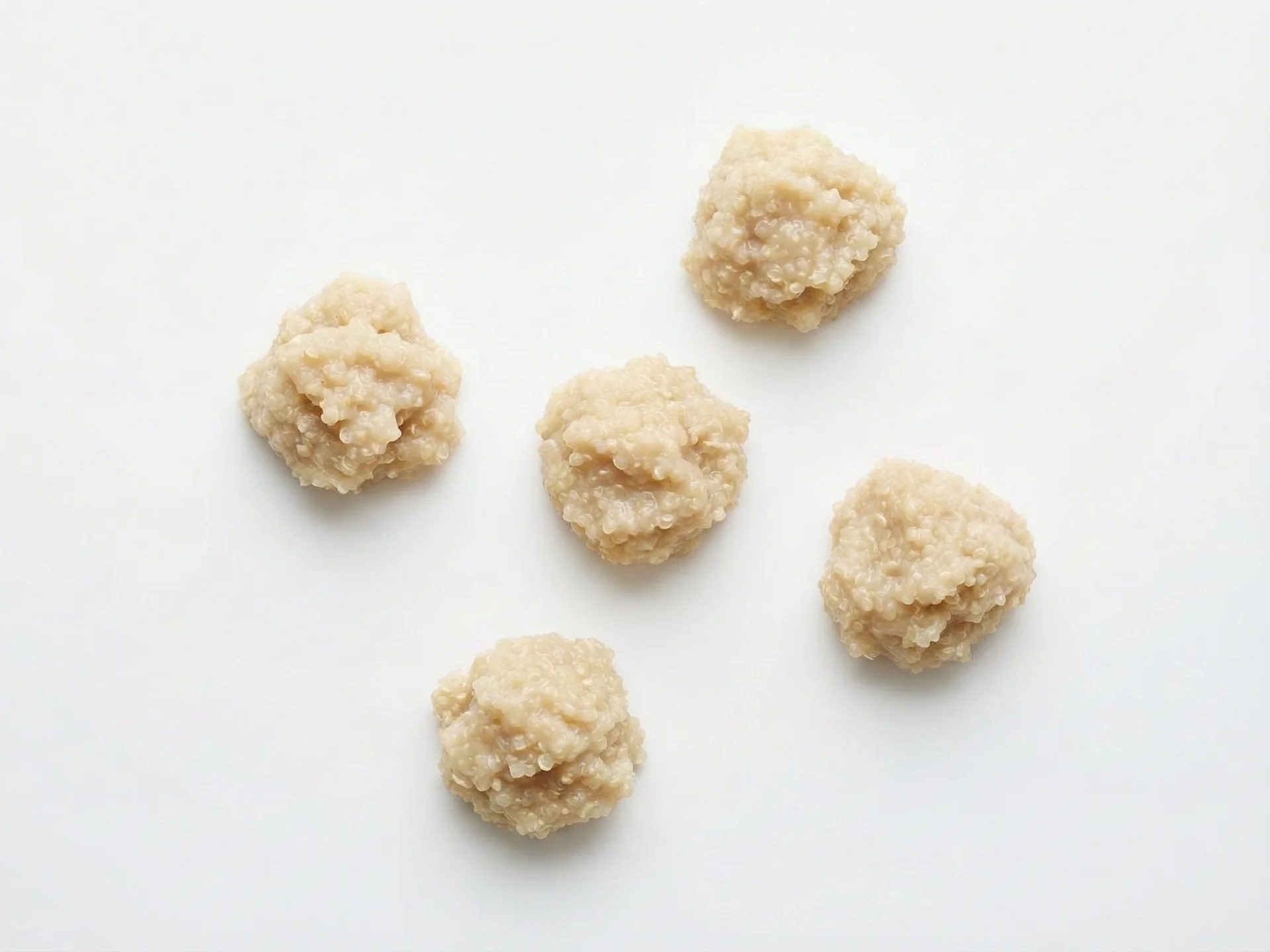
For babies 6-9 months, cook quinoa until very soft and slightly mushy, using extra water or broth to achieve a porridge-like consistency. Mix it with breast milk, formula, or a puree like sweet potato or apple to form a sticky, scoopable paste that's easy for little hands to grasp. Serve in small clumps on a highchair tray or loaded onto a pre-loaded spoon.6 to 9 months

For babies 6-9 months, cook quinoa until very soft and slightly mushy, using extra water or broth to achieve a porridge-like consistency. Mix it with breast milk, formula, or a puree like sweet potato or apple to form a sticky, scoopable paste that's easy for little hands to grasp. Serve in small clumps on a highchair tray or loaded onto a pre-loaded spoon.

  • Rinse quinoa well before cooking to remove bitterness.
  • Use a 1:2 ratio of quinoa to liquid for a softer texture.
  • Mix with purees to enhance flavor and nutrition.
  • Allow to cool completely to avoid burns.
  • Supervise closely as babies explore the texture.
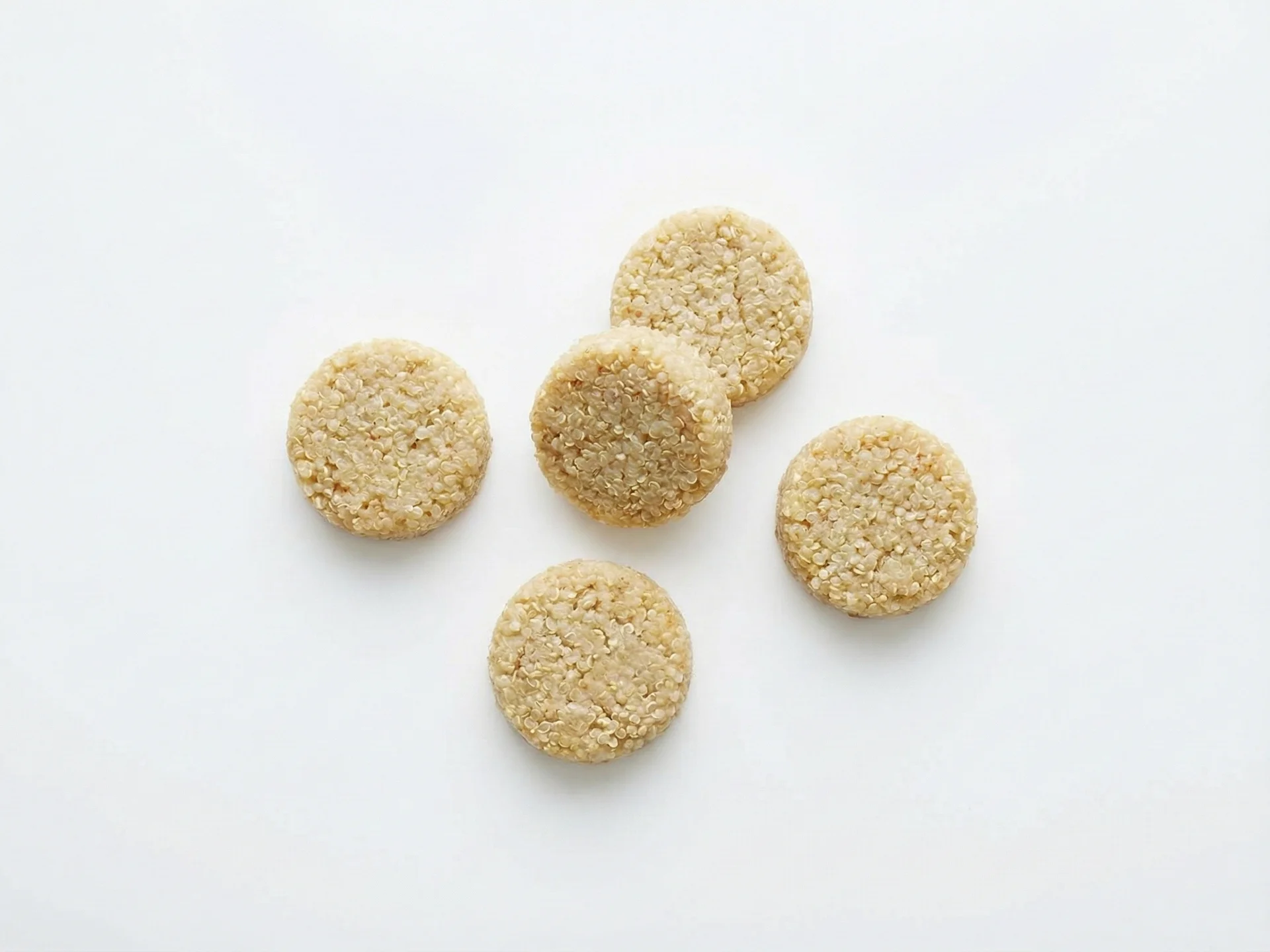
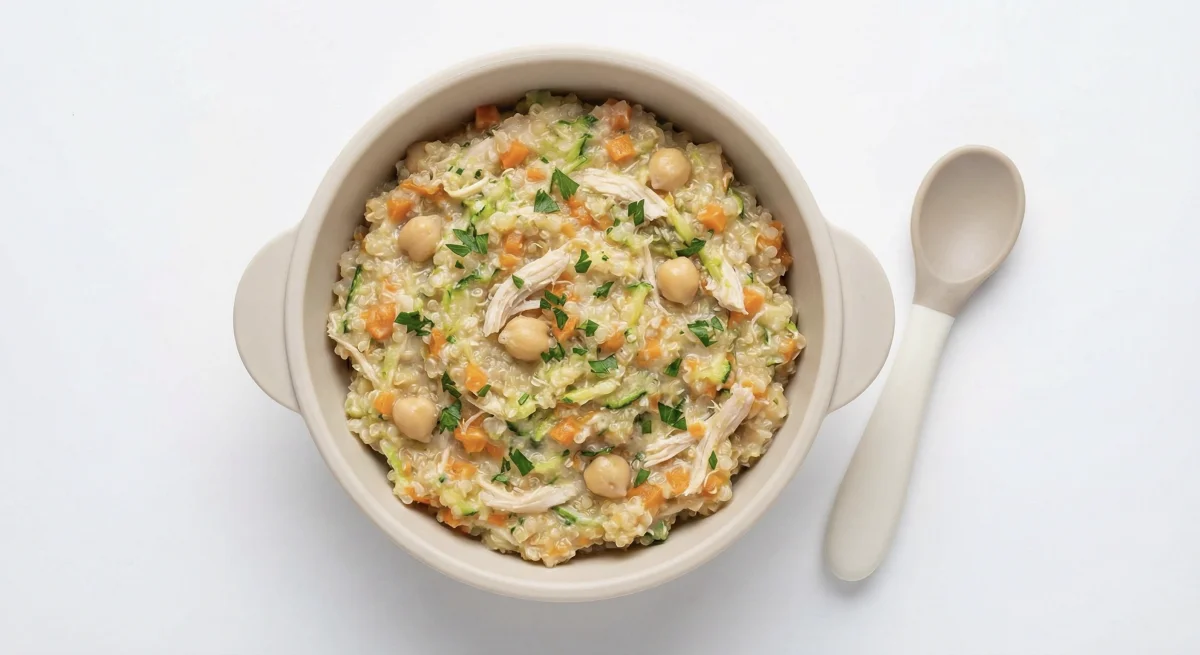
For babies 9-12 months, cook quinoa until tender but with more defined grains, and serve it as a finger food by forming it into small, soft patties or balls that are easy to pick up. You can also mix it with mashed vegetables, beans, or finely chopped herbs to add variety and encourage self-feeding skills.9 to 12 months

For babies 9-12 months, cook quinoa until tender but with more defined grains, and serve it as a finger food by forming it into small, soft patties or balls that are easy to pick up. You can also mix it with mashed vegetables, beans, or finely chopped herbs to add variety and encourage self-feeding skills.

  • Form quinoa into bite-sized balls or patties for easy handling.
  • Add finely chopped veggies for color and nutrients.
  • Experiment with mild spices like cinnamon or cumin.
  • Serve alongside other soft foods for a balanced meal.
  • Encourage use of utensils by pre-loading spoons.
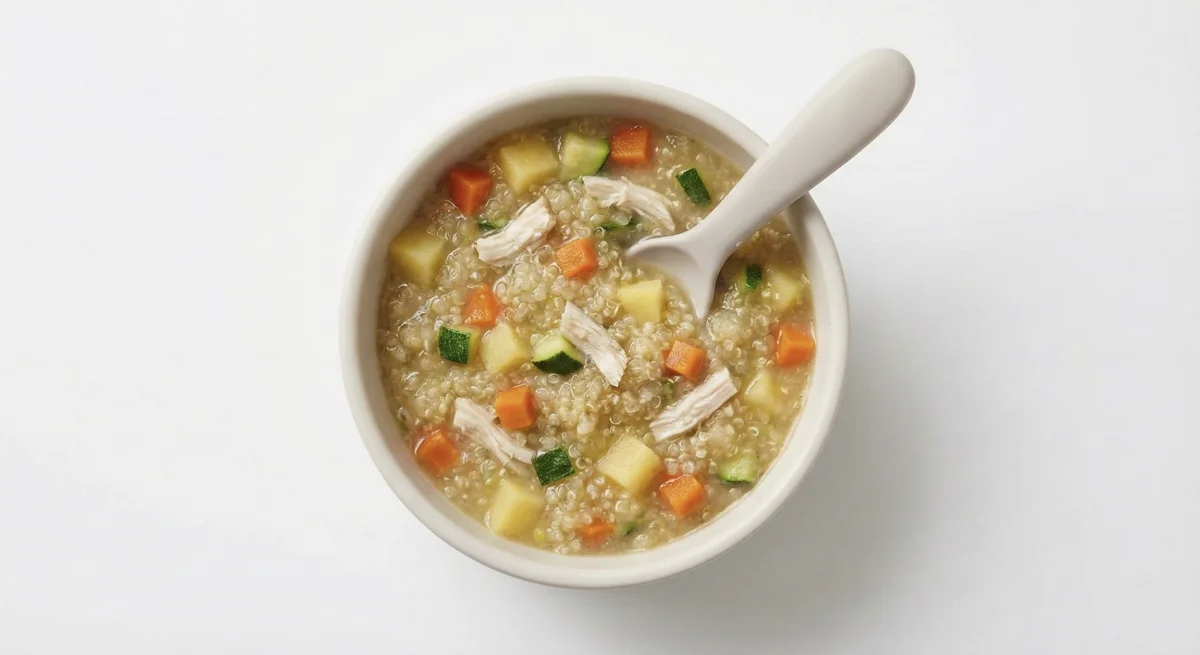
For toddlers 12 months and up, quinoa can be served as a side dish or mixed into meals like salads, soups, or casseroles, with a firmer texture to match developing chewing skills. Introduce it in more complex dishes, such as quinoa stir-fries or baked goods, to keep meals interesting and nutritious.12 months +

For toddlers 12 months and up, quinoa can be served as a side dish or mixed into meals like salads, soups, or casseroles, with a firmer texture to match developing chewing skills. Introduce it in more complex dishes, such as quinoa stir-fries or baked goods, to keep meals interesting and nutritious.

  • Use quinoa as a rice substitute in family meals.
  • Incorporate into muffins or pancakes for hidden nutrition.
  • Let toddlers help mix or serve to foster independence.
  • Pair with proteins like chicken or tofu for complete meals.
  • Store leftovers for quick, healthy snacks.

Safety & allergens

Choking risk: Low

Quinoa has a low choking risk when prepared properly. For young babies, cook it until very soft and mash or puree it to a smooth consistency. As your baby gets older, you can serve it as a soft, clumpy mash that sticks together slightly, which helps with self-feeding.

Not a common allergen

Quinoa is not a top allergen. As with any new food, offer it on its own and watch for any reaction.

Vitamins & minerals

Quinoa is a nutritional powerhouse for babies, providing complete protein for muscle development and growth. It's rich in iron, which is crucial for healthy blood and brain development2, and contains magnesium that supports bone health and energy metabolism3. The potassium in quinoa helps maintain proper fluid balance and supports healthy heart and muscle function4, while phosphorus works with calcium to build strong bones5.

Vitamins
Vitamin B1Vitamin B2Vitamin B3Vitamin B6Vitamin B9Vitamin E
Minerals
IronMagnesiumPhosphorusPotassiumZincManganese

Nutritional synergy

Pair quinoa with vitamin C-rich foods like sweet potatoes or bell peppers to boost iron absorption2, making it an even better source of this important mineral for your baby.

Common questions

How do I cook quinoa for my baby?

Rinse quinoa well under cold water to remove its natural bitter coating (saponins), then cook it in water or low-sodium broth until very soft—about 15-20 minutes. For young babies, blend it with a little liquid to create a smooth puree; for older babies, mash it slightly for a thicker texture.

What if my baby seems gassy after eating quinoa?

Some babies might experience gas as their digestive systems adjust to new fibers. Start with small amounts (1-2 teaspoons) and gradually increase. Make sure to rinse quinoa thoroughly before cooking, as this removes compounds that can cause digestive discomfort.

Can I mix quinoa with other foods?

Absolutely! Quinoa pairs wonderfully with fruits like mashed banana or applesauce, vegetables like sweet potato or avocado, and proteins like yogurt or finely shredded chicken. Mixing foods helps introduce new flavors and textures while boosting nutritional variety.

Sources & references

  1. 1TBCA - Tabela Brasileira de Composição de Alimentos
  2. 2Moss CR, 2022
  3. 3Lönnerdal B, 1995
  4. 4Strohm D et al., 2017
  5. 5Couce ML et al., 2021