FoodsFruitOrange
Orange

Fruit

Orange

Oranges are a bright, sweet, and juicy fruit that babies often love. They're packed with vitamin C, which helps support your baby's immune system and aids in iron absorption from other foods.[1] Their natural sweetness makes them a great way to introduce new flavors.

6m+Not a common allergenChoking risk: Low
First age6m+
CategoryFruit
Common allergenNo
Choking riskLow

When can babies eat Orange?

Oranges can be introduced around 6 months of age, when your baby starts solids. It's best to offer them after your baby has tried a few simpler fruits and vegetables first.

How to serve Orange by age

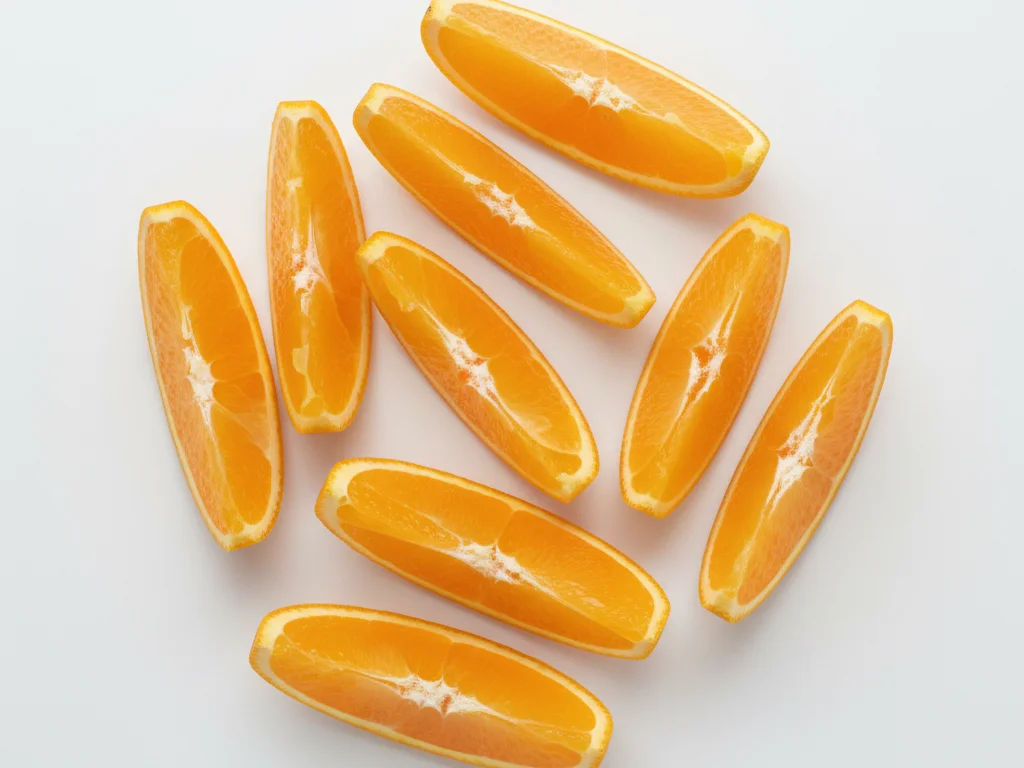
For 6-9 month olds, offer large, peeled orange segments with all seeds and the tough white pith removed. Cut segments into long, thick strips (about the width of two adult fingers) that are easy for your baby to hold and gnaw on. The large size helps prevent choking while allowing them to suck and mash the fruit.
6 to 9 months

For 6-9 month olds, offer large, peeled orange segments with all seeds and the tough white pith removed. Cut segments into long, thick strips (about the width of two adult fingers) that are easy for your baby to hold and gnaw on. The large size helps prevent choking while allowing them to suck and mash the fruit.

  • Remove all seeds carefully
  • Peel completely and remove white pith
  • Cut into large, graspable strips
  • Supervise closely during eating
  • Offer at room temperature for better acceptance
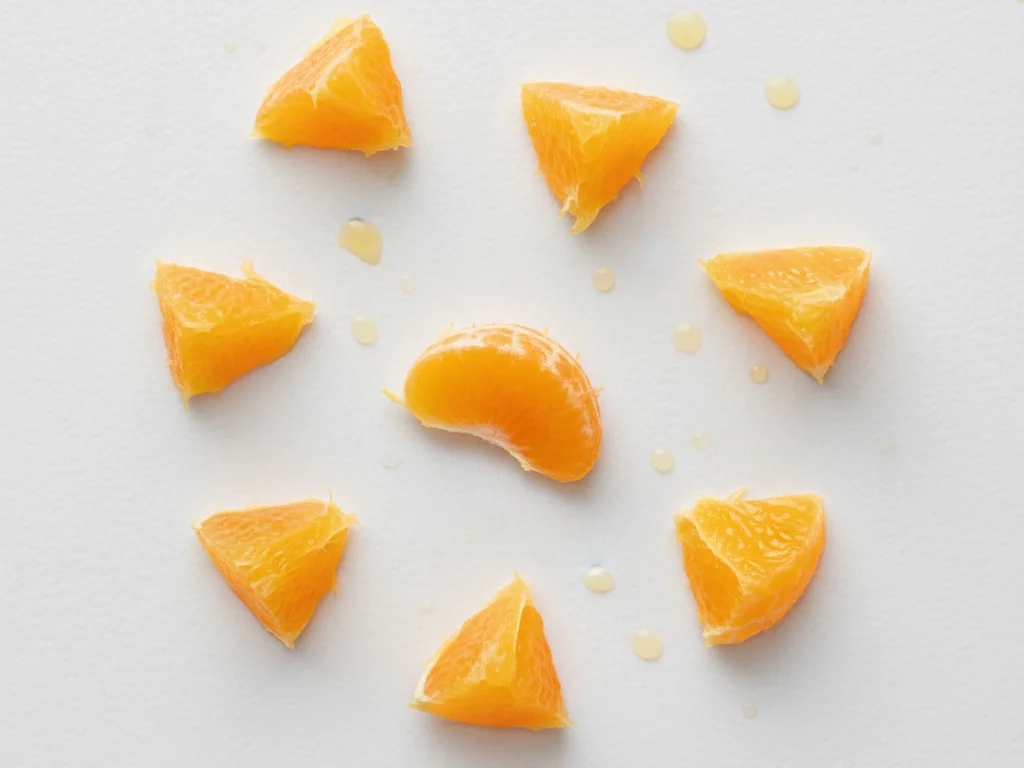
For 9-12 month olds, you can offer smaller, bite-sized pieces of orange segments once your baby has developed a pincer grasp. Continue to remove all seeds and most of the membrane. The pieces should be soft enough to mash with gentle pressure between your fingers.
9 to 12 months

For 9-12 month olds, you can offer smaller, bite-sized pieces of orange segments once your baby has developed a pincer grasp. Continue to remove all seeds and most of the membrane. The pieces should be soft enough to mash with gentle pressure between your fingers.

  • Cut into small, pea-sized pieces
  • Remove membrane from most pieces
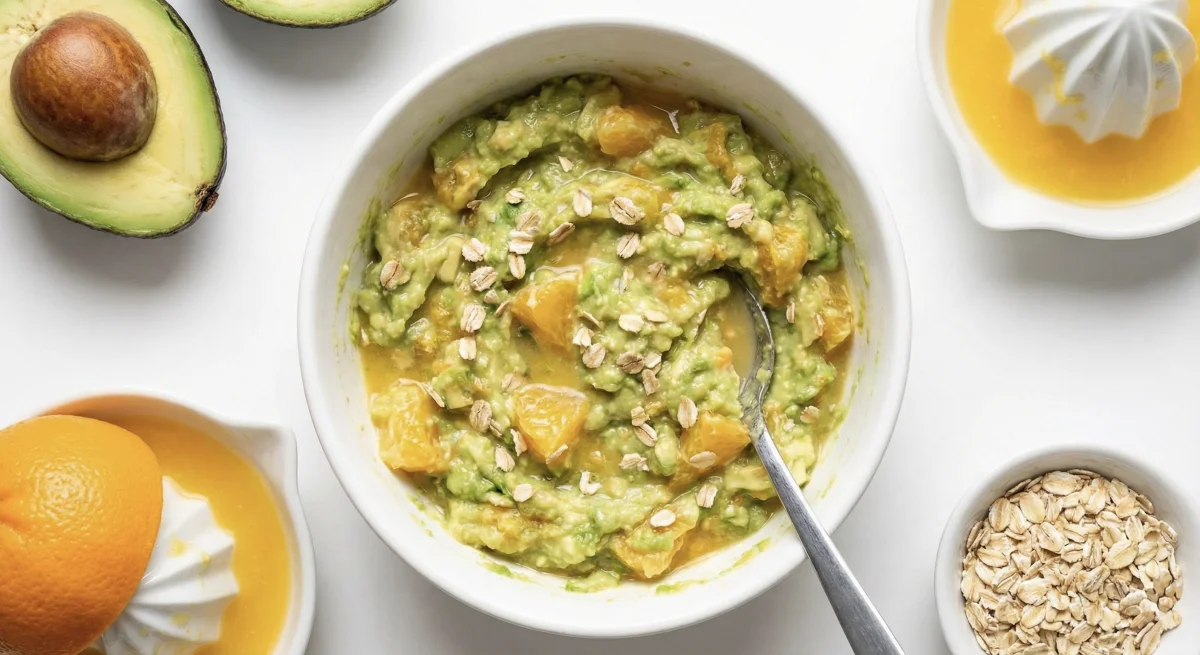
  • Mix with yogurt or oatmeal for variety
  • Offer alongside other finger foods
  • Watch for improved chewing skills
For toddlers 12 months and up, you can offer whole orange segments with some membrane intact as they practice more advanced chewing. They can also try peeling oranges themselves with supervision. Continue to ensure all seeds are removed before serving.
12 months +

For toddlers 12 months and up, you can offer whole orange segments with some membrane intact as they practice more advanced chewing. They can also try peeling oranges themselves with supervision. Continue to ensure all seeds are removed before serving.

  • Teach how to peel with supervision
  • Allow some membrane for chewing practice
  • Use in fruit salads or smoothies
  • Combine with proteins for balanced meals
  • Encourage self-feeding with segments

Safety & allergens

Choking risk: Low

Oranges have a soft, juicy texture that's generally safe when prepared appropriately. For younger babies, always remove the peel and any tough membranes, and serve in age-appropriate sizes. Supervise your baby closely during all meals.

Not a common allergen

Orange is not a top allergen. As with any new food, offer it on its own and watch for any reaction.

Vitamins & minerals

Oranges are famous for their vitamin C content, which is essential for a healthy immune system and helps your baby's body absorb iron from plant-based foods.[1] They also provide vitamin A for good vision and skin health,[2] and folate (vitamin B9) which supports cell growth and development.[3] The potassium in oranges helps maintain healthy fluid balance.[4]

Vitamins
Vitamin VITAMIN CVitamin VITAMIN AVitamin VITAMIN B9
Minerals
PotassiumCalciumMagnesium