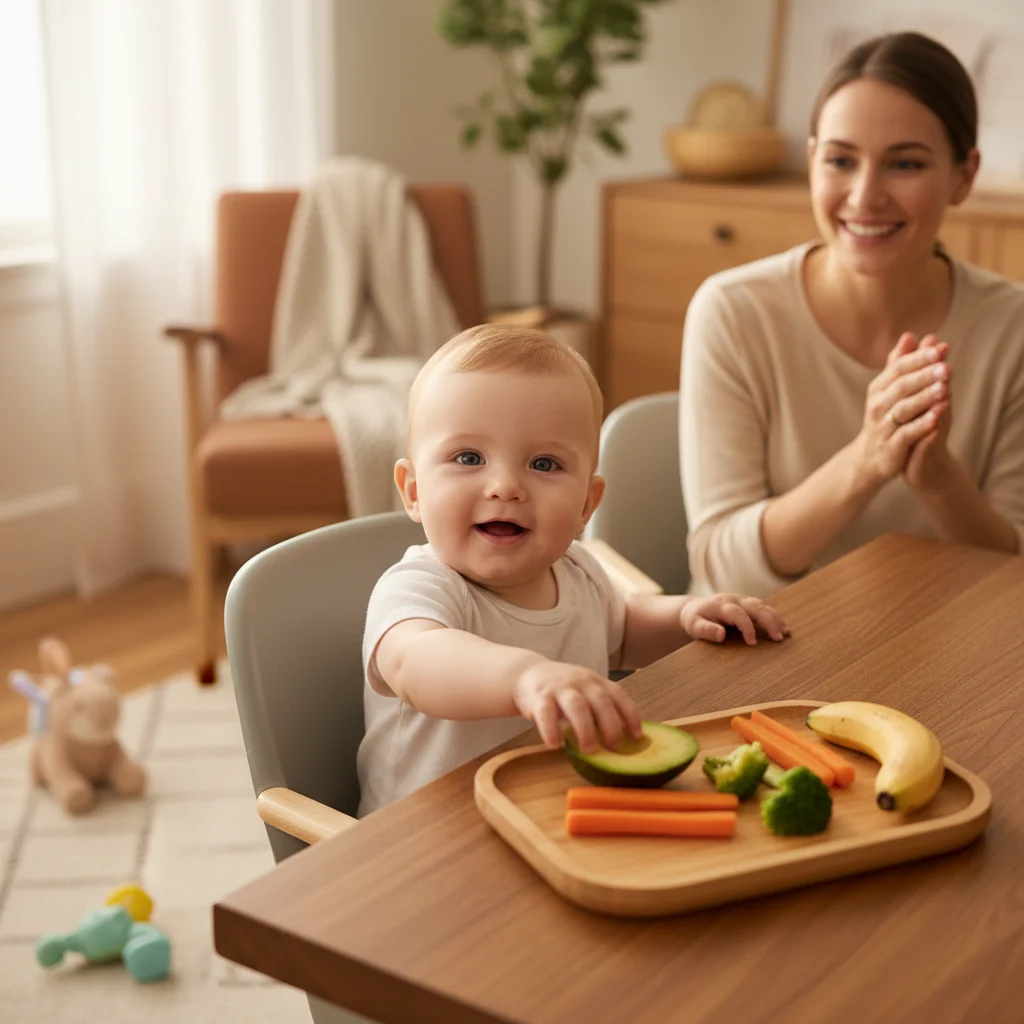
Sitting with minimal support
This is the most critical physical sign. The baby doesn't need to sit perfectly on their own like an adult, but they must be able to:
- Keep their trunk steady and head upright without falling to the sides.
- Have stability to use their hands while sitting.
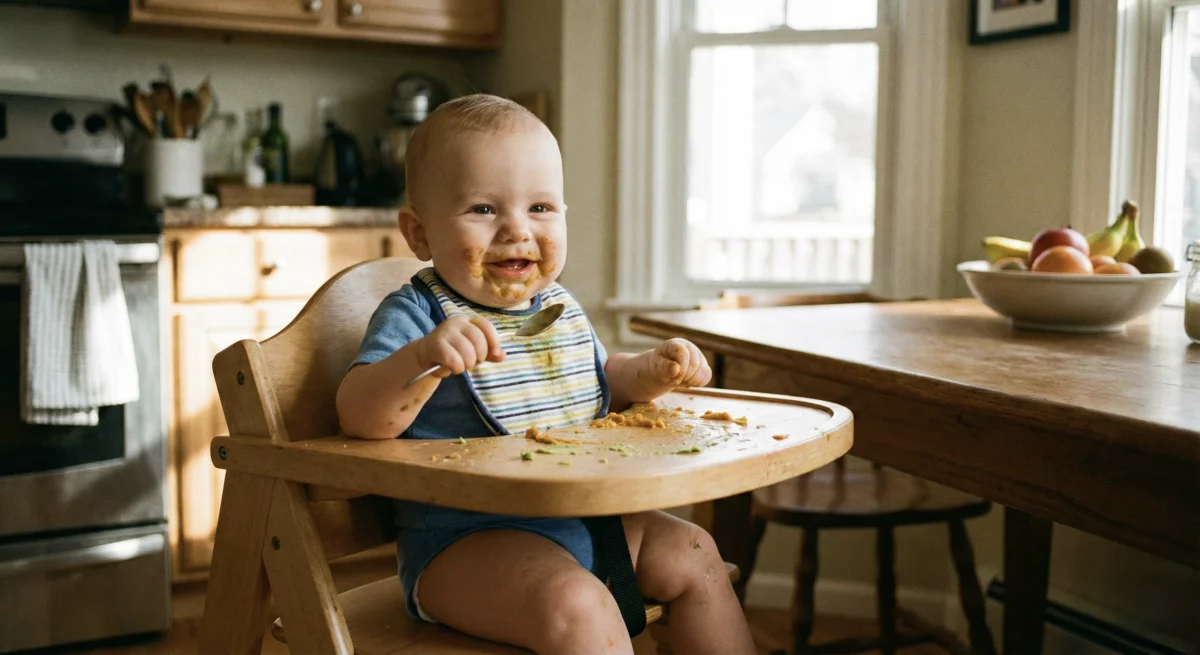
Why is it important? If the baby cannot support their trunk, the throat muscles are not in the ideal position for safe swallowing, which drastically increases the risk of choking.
Disappearance of the "Extrusion Reflex"
You know when a baby pushes anything that touches their tongue out of their mouth? This is the extrusion reflex, a natural protection to prevent objects from entering the throat too early.
- To start eating, this reflex must have diminished or disappeared.
- The baby must be able to keep food in their mouth and move it back to swallow.
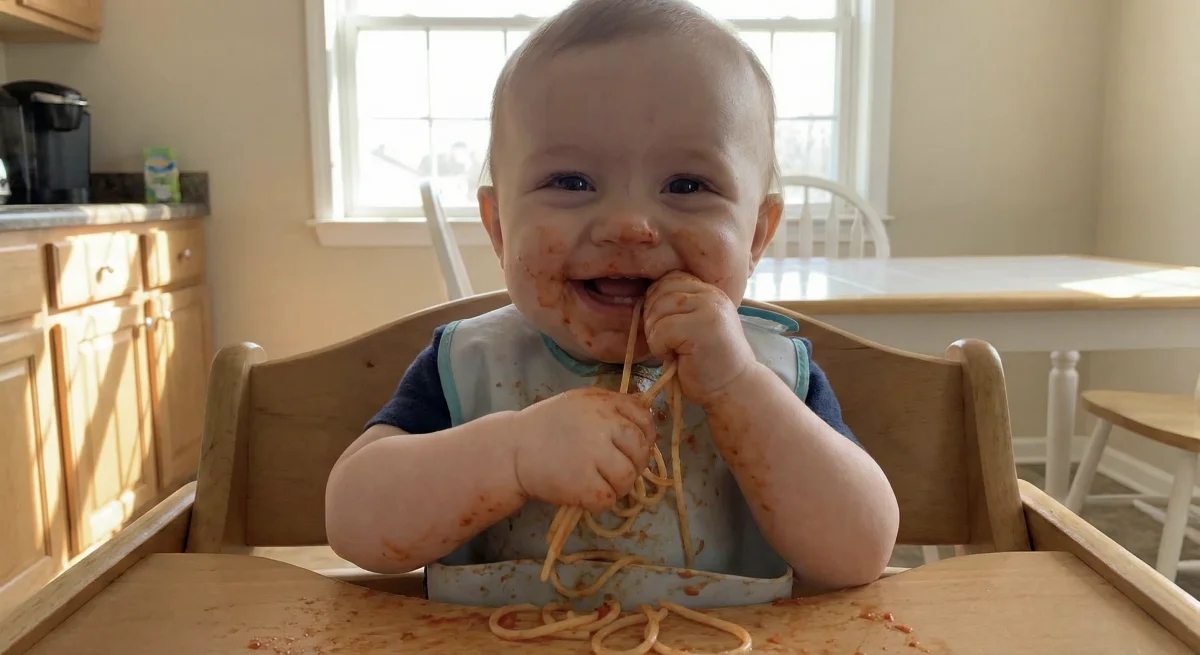
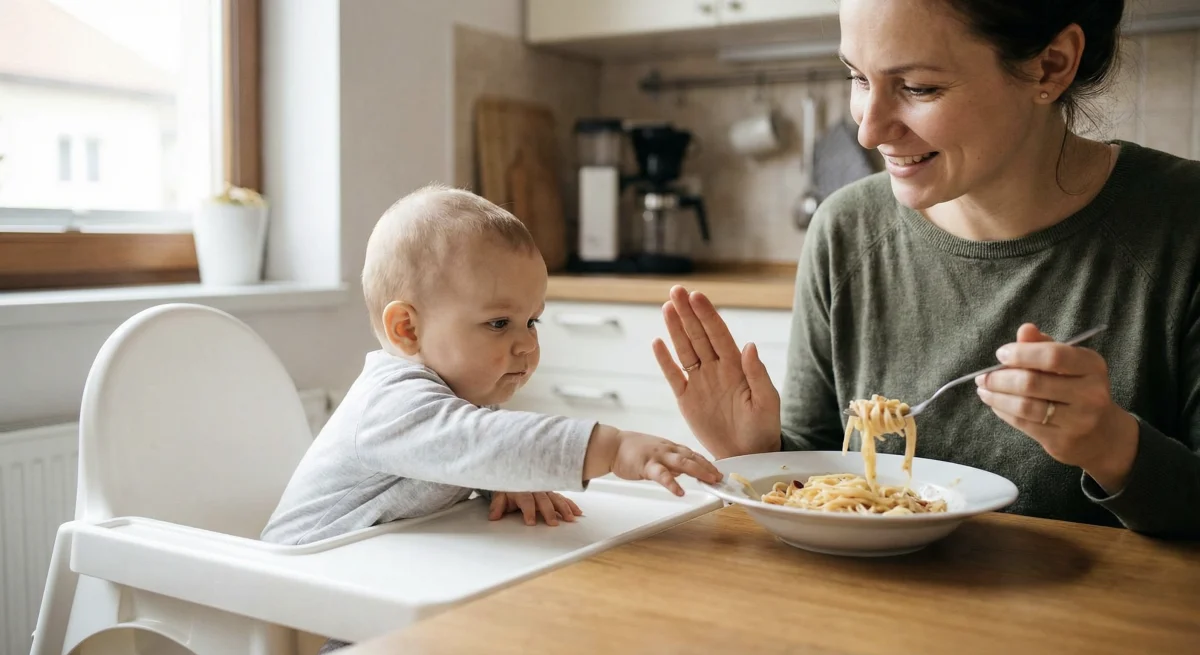
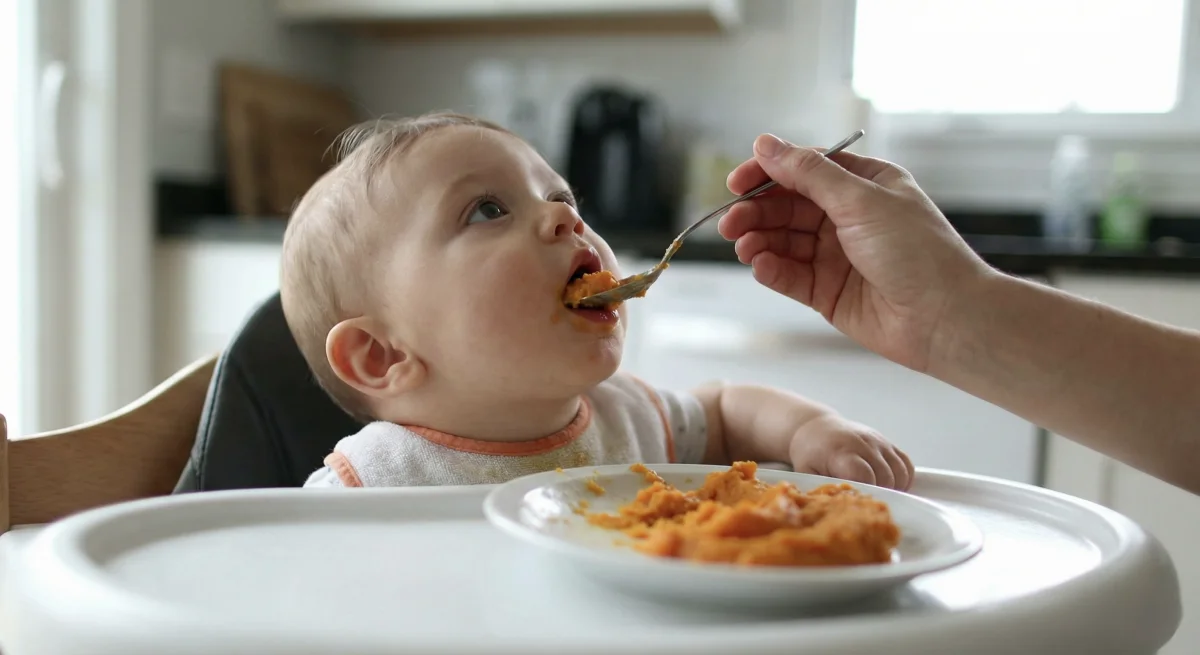
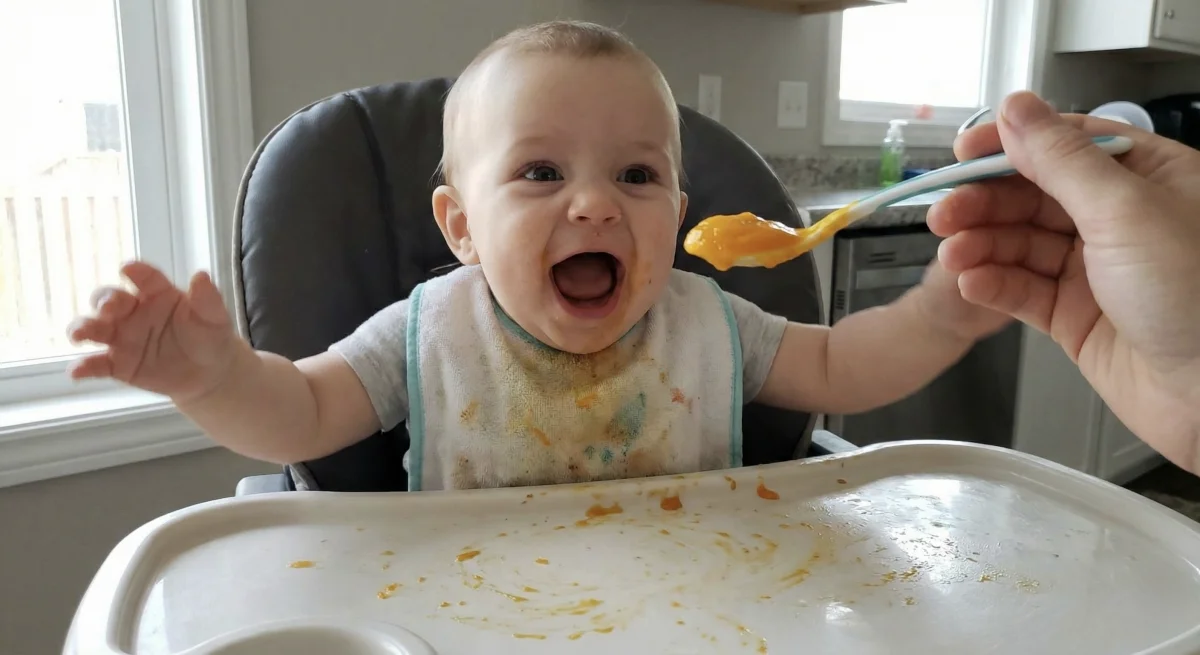
Active interest in food
It’s not just looking; it’s an objective interest.
- The baby tries to grab what you are eating.
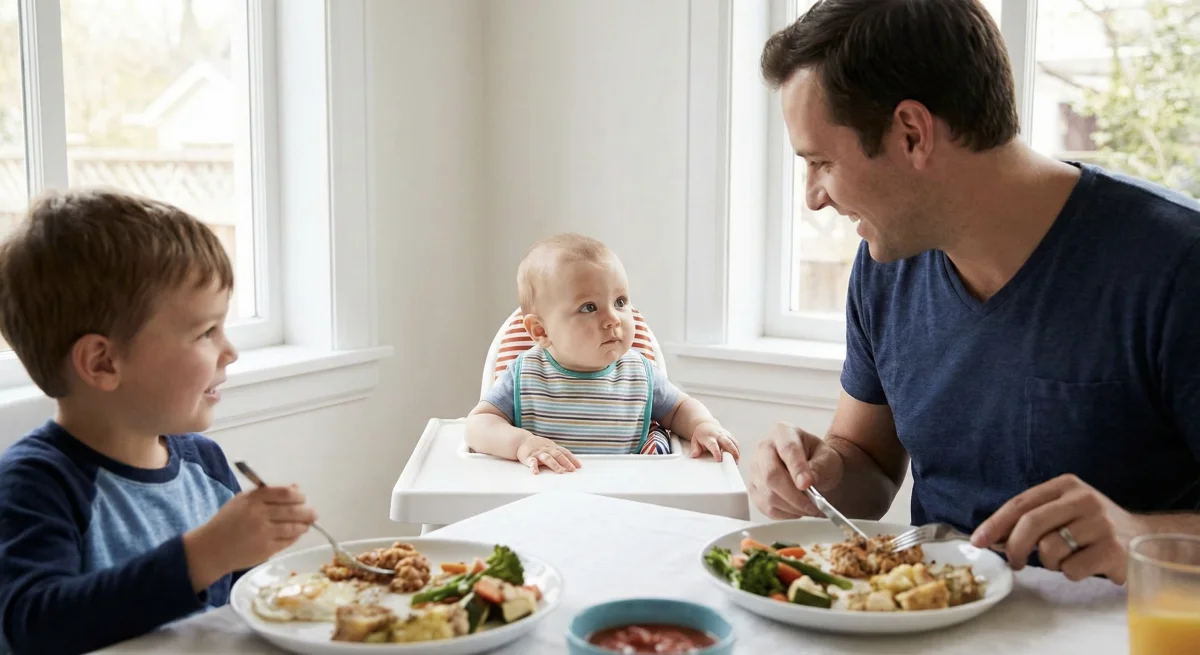
- They follow the path of the cutlery from the plate to your mouth.
- They open their mouth or show excitement upon seeing food.
"Hand-Eye-Mouth" Coordination
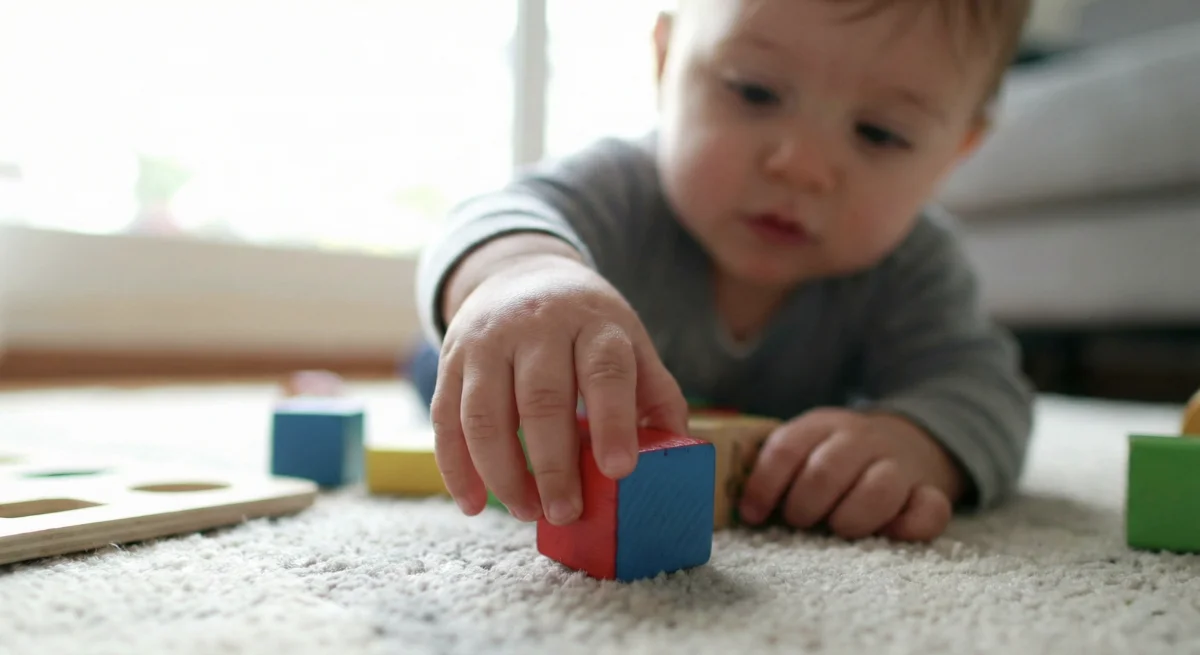
The baby must demonstrate the ability to:
- Grab objects with their hands (usually with a "pincer" or "palmar" grasp).
- Bring these objects directly to their mouth with precision.
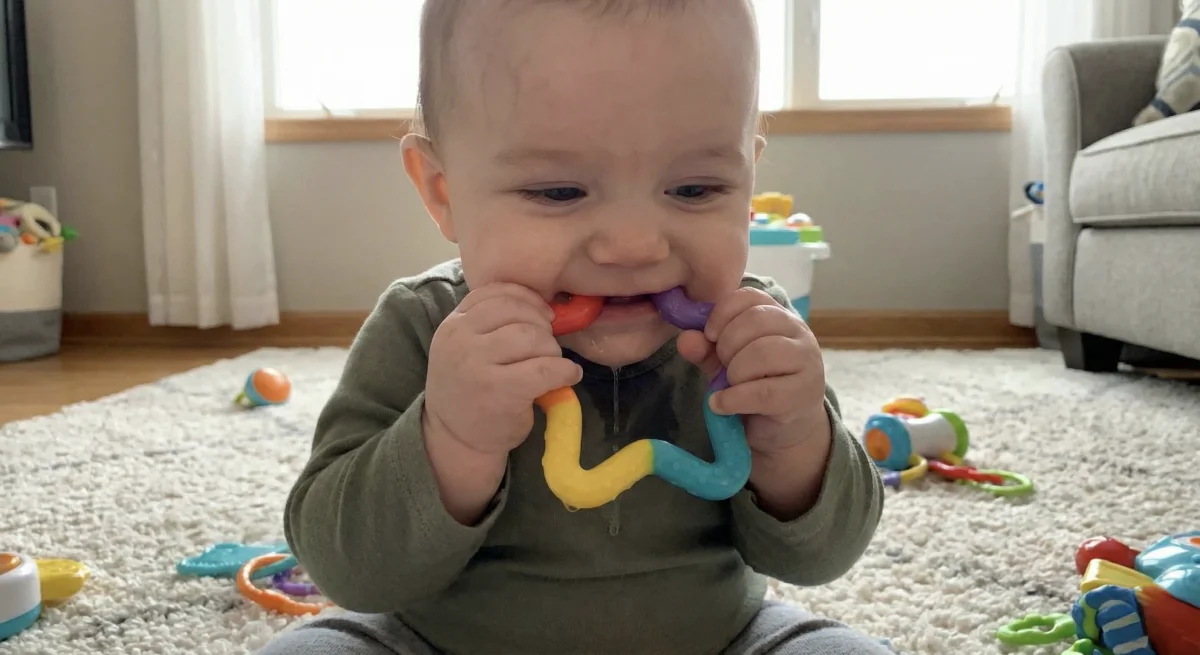
This sign is fundamental, especially if you plan to follow the BLW (Baby-Led Weaning) method, where the baby feeds themselves.
What if the baby is 6 months old and doesn't show the signs?
There’s no need to despair. Child development is not an exact science. If the baby is 6 months old but is still "floppy" or lacks interest:
- Continue with milk (breast milk or formula) — it remains the main source of nutrition.
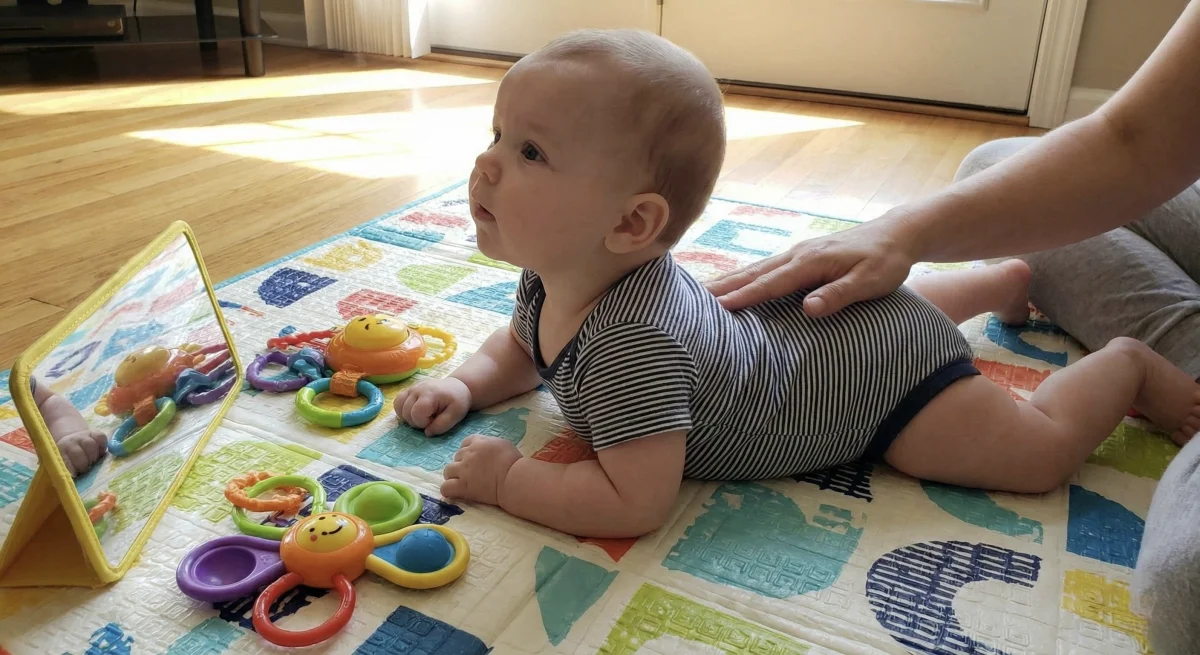
- Encourage floor time: Place the baby on their tummy and encourage them to strengthen their trunk.
- Bring them to the table: Let them participate in family meals (even without eating) to spark curiosity.

Complementary feeding is a learning window. Forcing the start before readiness can create trauma and increase safety risks.
Sources & references
Health claims in this content are backed by these sources.
- 1Brasil. Ministério da Saúde. (2019). Guia alimentar para crianças menores de 2 anos. Secretaria de Atenção Primária à Saúde, Departamento de Promoção da Saúde.http://bvsms.saude.gov.br/bvs/publicacoes/guia_alimentar_criancas_menores_2_anos.pdf
- 2Sociedade Brasileira de Pediatria (SBP). (2018). Guia prático de atualização: A alimentação complementar e o método BLW (Baby-Led Weaning) (Nº 4). Departamento Científico de Nutrologia.https://www.sbp.com.br/fileadmin/user_upload/2017/03/Guia-Pratico-Alimentacao-Complementar-e-BLW.pdf
- 3World Health Organization (WHO). (2023). WHO guideline on complementary feeding of infants and young children 6–23 months of age. World Health Organization.https://www.who.int/publications/i/item/9789240081864
- 4American Academy of Pediatrics (AAP). (2022, August 12). Starting Solid Foods. HealthyChildren.org.https://www.healthychildren.org/English/ages-stages/baby/feeding-nutrition/Pages/Starting-Solid-Foods.aspx
- 5Fewtrell, M., Bronsky, J., Campoy, C., Domellöf, M., Embleton, N., Fidler Mis, N., Hojsak, I., Hulst, J. M., Indrio, F., Lapillonne, A., & Molgaard, C. (2017). Complementary Feeding: A Position Paper by the European Society for Paediatric Gastroenterology, Hepatology, and Nutrition (ESPGHAN) Committee on Nutrition. Journal of Pediatric Gastroenterology and Nutrition, 64(1), 119–132.https://doi.org/10.1097/MPG.0000000000001454