FoodsDairyghee
ghee

Dairy

ghee

Ghee is a type of clarified butter that's been used for centuries in cooking and traditional medicine. It has a rich, nutty flavor that many babies enjoy, and its smooth, spreadable texture makes it easy to incorporate into baby foods. Ghee is particularly valued for its high concentration of fat-soluble vitamins and healthy fats that support brain development and energy needs in growing babies.[1]

6m+Common allergenChoking risk: Low
First age6m+
CategoryDairy
Common allergenYes
Choking riskLow

When can babies eat ghee?

Ghee can be introduced around 6 months when babies start solids, as it's a good source of healthy fats for energy and development. Since it's a dairy product, it's best introduced after your baby has tolerated other first foods like fruits and vegetables.

How to serve ghee by age

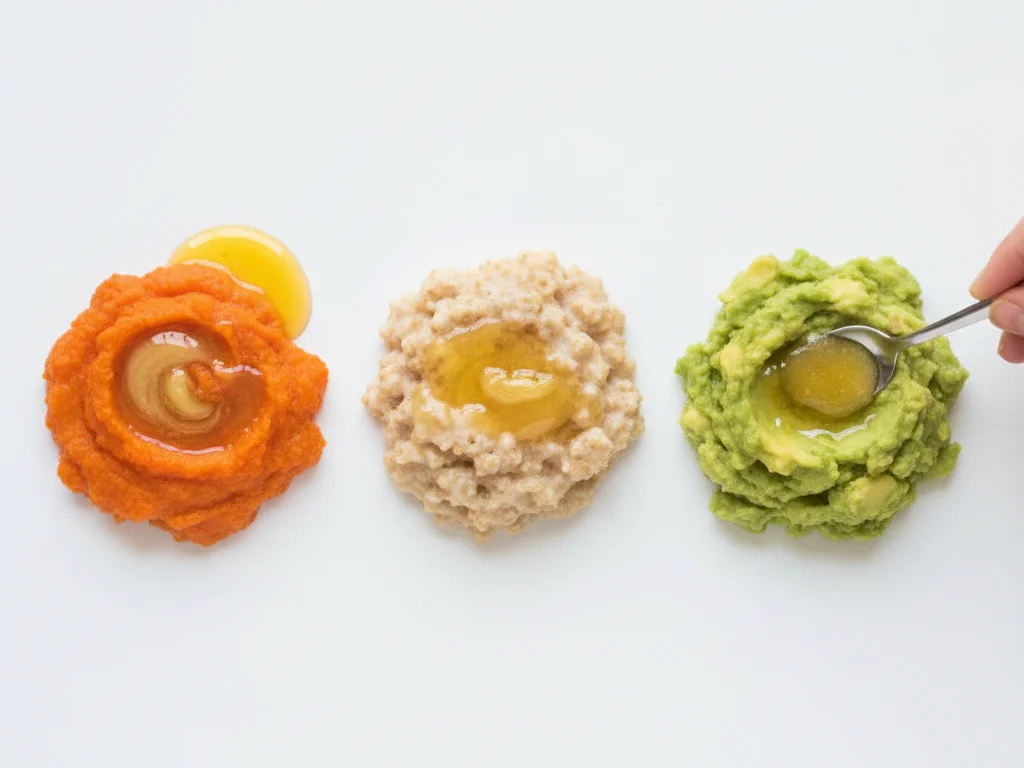
For beginners, melt a small amount of ghee (¼ teaspoon) and mix it into vegetable or fruit purees, cereals, or mashed foods. The liquid consistency blends easily and adds richness to simple purees.
6 to 9 months

For beginners, melt a small amount of ghee (¼ teaspoon) and mix it into vegetable or fruit purees, cereals, or mashed foods. The liquid consistency blends easily and adds richness to simple purees.

  • Start with just ¼ teaspoon mixed into 2-3 tablespoons of puree
  • Choose organic, grass-fed ghee when possible for higher nutrient content
  • Mix into warm (not hot) foods to preserve nutrients
  • Introduce separately from other new foods to monitor for reactions
  • Use to sauté vegetables before pureeing for added flavor
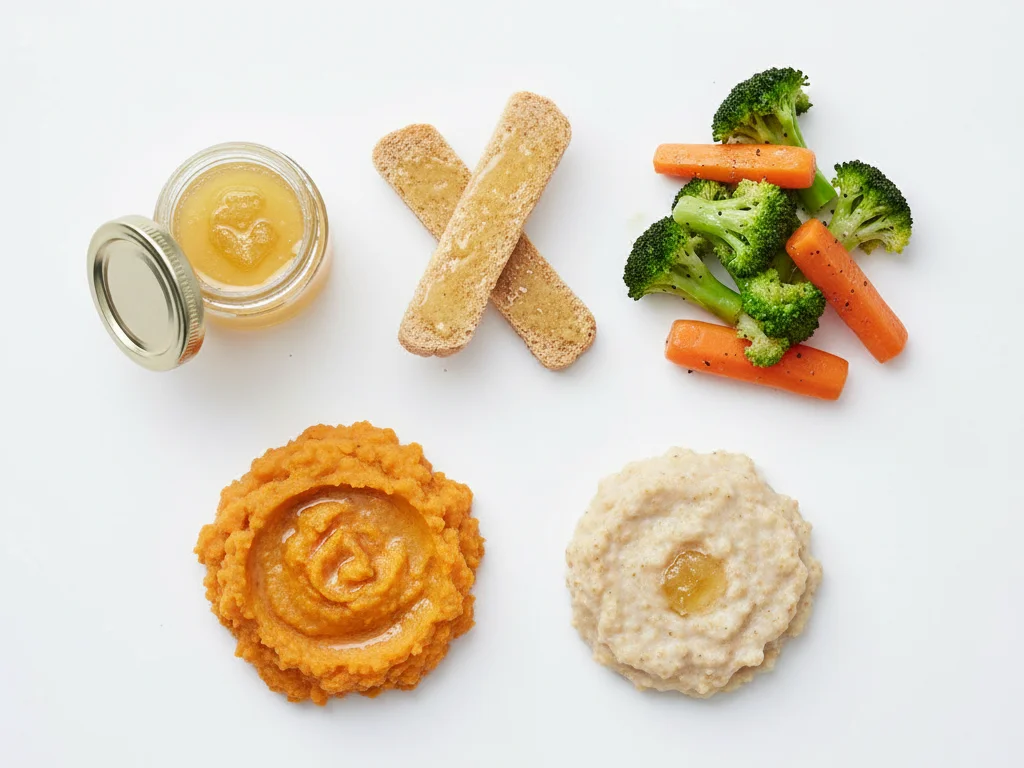
As your baby develops chewing skills, use ghee to cook soft finger foods or spread thinly on toast strips. You can also mix it into thicker mashes or grain dishes for added nutrition and flavor.
9 to 12 months

As your baby develops chewing skills, use ghee to cook soft finger foods or spread thinly on toast strips. You can also mix it into thicker mashes or grain dishes for added nutrition and flavor.

  • Spread a thin layer on toast fingers or soft crackers
  • Use to sauté small, soft vegetable pieces
  • Mix into oatmeal, quinoa, or other cooked grains
  • Add to mashed beans or lentils for creamier texture
  • Combine with herbs for flavorful vegetable coatings
Toddlers can enjoy ghee in various family meals—use it for cooking eggs, vegetables, or grains, or spread on bread. It adds delicious flavor while providing healthy fats for continued growth and development.
12 months +

Toddlers can enjoy ghee in various family meals—use it for cooking eggs, vegetables, or grains, or spread on bread. It adds delicious flavor while providing healthy fats for continued growth and development.

  • Use for scrambling eggs or cooking pancakes
  • Drizzle over cooked vegetables or grains
  • Spread on whole grain bread or muffins
  • Mix into rice or pasta dishes
  • Use in baking as a butter substitute

Safety & allergens

Choking risk: Low

Ghee presents minimal choking risk since it's a smooth, liquid fat at room temperature and melts easily. You can safely mix small amounts into purees, cereals, or spread thinly on toast. Always supervise your baby during meals and ensure they're sitting upright.

Common allergen

Cow's milk allergy affects about 2-3% of infants and young children, making it one of the most common food allergies in babies.[2]

Vitamins & minerals

Ghee is rich in healthy fats that provide concentrated energy for growing babies, with about 14g of fat per tablespoon. It contains fat-soluble vitamins A, D, E, and K, which support vision, bone health, and immune function.[1] The butyric acid in ghee may also support digestive health by nourishing gut cells.[4]

Vitamins
Vitamin VITAMIN AVitamin VITAMIN DVitamin VITAMIN EVitamin VITAMIN K

Pairs well with