FoodsDairyCottage Cheese
Cottage Cheese

Dairy

Cottage Cheese

Cottage cheese is a soft, creamy dairy food that's perfect for babies starting solids. It's packed with protein for growth and calcium for strong bones and teeth.[1] The mild flavor and smooth texture make it easy for little ones to enjoy, and it can be mixed with fruits or vegetables for variety.

6m+Common allergenChoking risk: Low
First age6m+
CategoryDairy
Common allergenYes
Choking riskLow

When can babies eat Cottage Cheese?

You can introduce cottage cheese around 6 months, when your baby starts solids. It's best to offer it after they've tried a few single-ingredient foods first.

How to serve Cottage Cheese by age

For babies 8-12 months, serve cottage cheese in dollops on their tray or on a pre-loaded spoon. The soft curds help them practice picking up small pieces and managing lumpy textures. You can also spread it thinly on toast strips for easier handling.
8 to 12 months

For babies 8-12 months, serve cottage cheese in dollops on their tray or on a pre-loaded spoon. The soft curds help them practice picking up small pieces and managing lumpy textures. You can also spread it thinly on toast strips for easier handling.

  • Use a spoon to place small mounds on the highchair tray
  • Mix with mashed banana or avocado to create a spreadable texture
  • Offer on a spoon and let baby bring it to their mouth
  • Ensure cottage cheese is cold but not frozen
  • Start with 1-2 tablespoons per serving
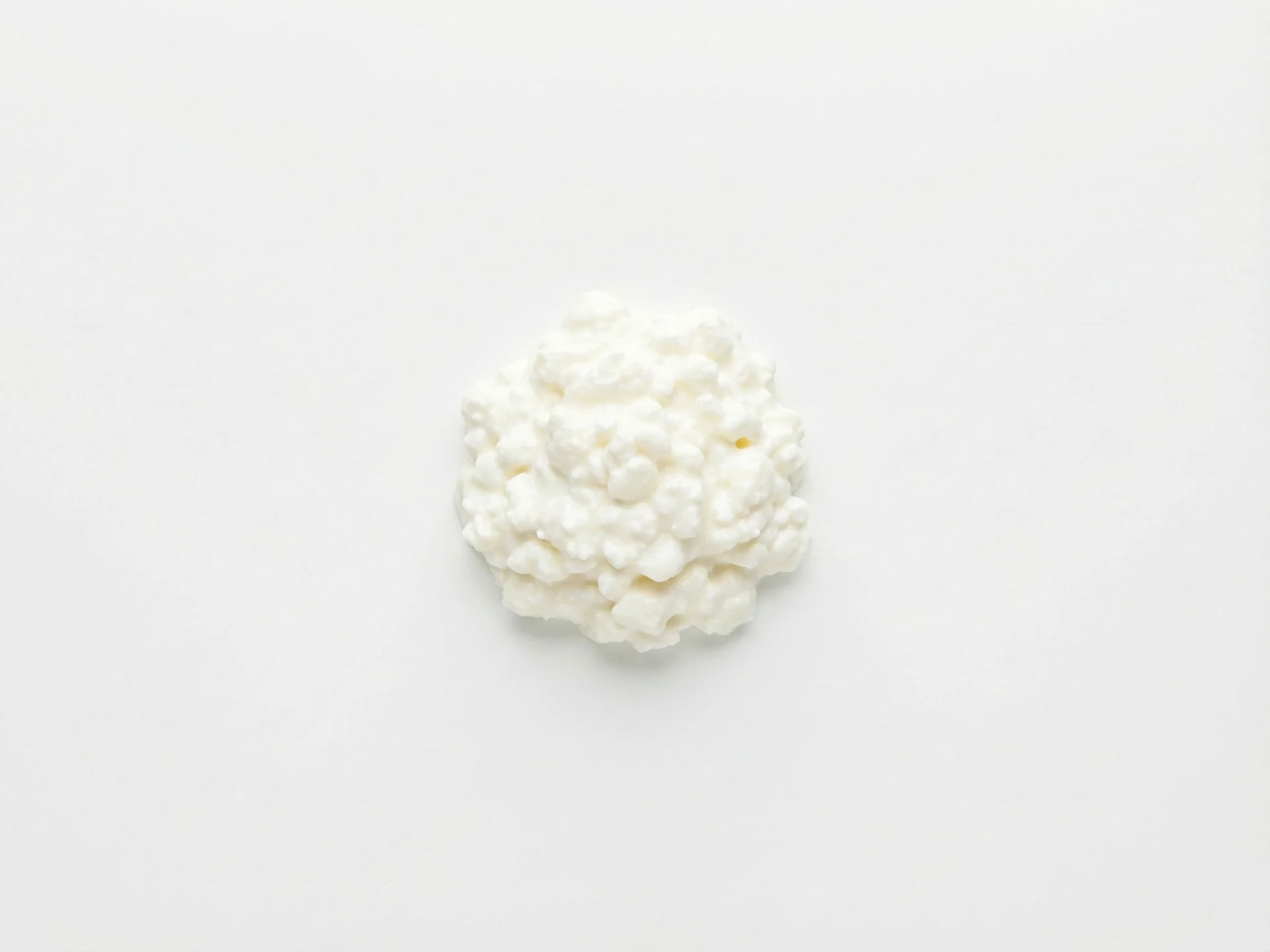
For toddlers 12 months and up, cottage cheese can be served as a dip for vegetable sticks, mixed into scrambled eggs, or used as a filling for soft wraps. At this stage, they can practice using utensils to scoop it themselves.
12 months +

For toddlers 12 months and up, cottage cheese can be served as a dip for vegetable sticks, mixed into scrambled eggs, or used as a filling for soft wraps. At this stage, they can practice using utensils to scoop it themselves.

  • Let your toddler practice scooping with a child-safe spoon
  • Mix with herbs like dill or chives for flavor variety
  • Use as a protein-rich spread on crackers or bread
  • Combine with cooked pasta for a creamy sauce
  • Offer alongside fruit for a balanced snack

Safety & allergens

Choking risk: Low

Cottage cheese is naturally soft and mushy, so it's low risk for choking. For extra safety, you can mash it with a fork to ensure no large curds remain. Always supervise your baby during meals and ensure they're sitting upright.

Common allergen

Cow's milk allergy affects about 2-3% of infants and young children.[2]

Vitamins & minerals

Cottage cheese is an excellent source of protein, which supports your baby's muscle and tissue development.[4] It's also rich in calcium and phosphorus, two minerals that work together to build strong bones and teeth.[5] The B vitamins in cottage cheese, like B12, help with energy production and brain health.[6]

Vitamins
Vitamin VITAMIN B2Vitamin VITAMIN B12Vitamin VITAMIN A
Minerals
CalciumPhosphorusSodiumSelenium