FoodsProteinWhite ham
White ham

Protein

White ham

White ham is a savory, tender meat that can be a convenient source of protein for your baby. It's often enjoyed for its mild flavor and soft texture when prepared properly, making it a good option to introduce meats into your little one's diet. While it provides important nutrients, it's best offered in moderation due to its sodium content.

6m+Not a common allergenChoking risk: Medium
First age6m+
CategoryProtein
Common allergenNo
Choking riskMedium

When can babies eat White ham?

You can introduce white ham around 6 months when starting solids, but it's important to choose low-sodium varieties and prepare it safely to minimize choking risks.

How to serve White ham by age

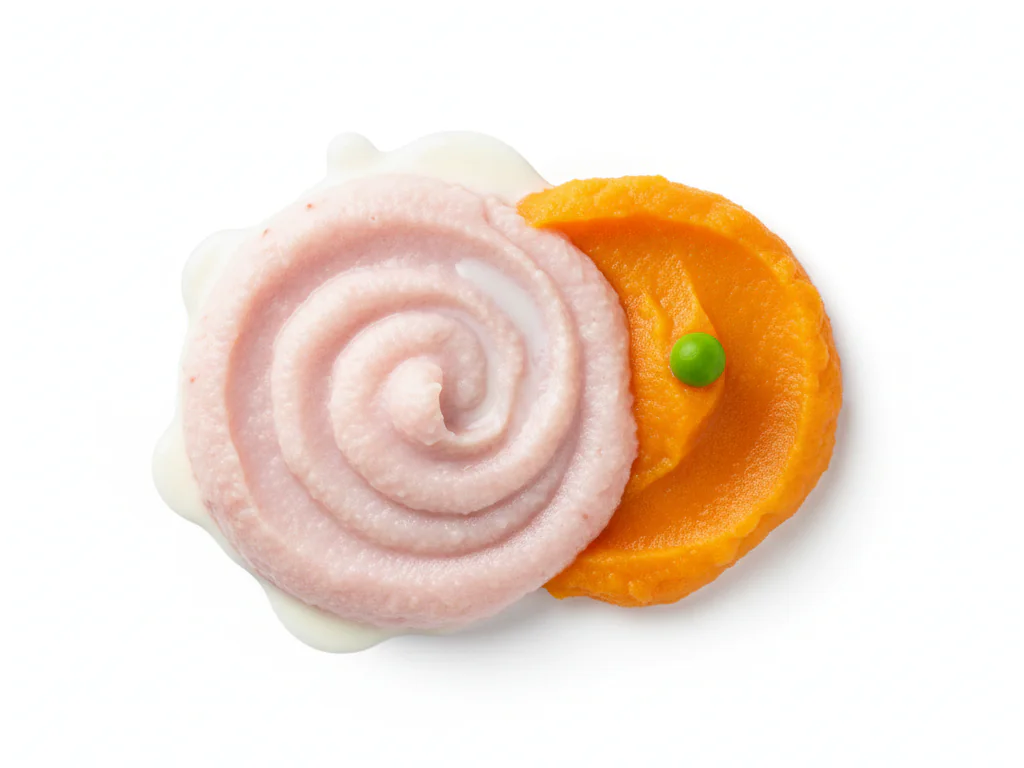
For babies 6-9 months, puree cooked white ham with a little breast milk, formula, or water until completely smooth. You can also mix it with pureed vegetables like sweet potato or peas to add flavor and nutrients. Ensure there are no lumps.
6 to 9 months

For babies 6-9 months, puree cooked white ham with a little breast milk, formula, or water until completely smooth. You can also mix it with pureed vegetables like sweet potato or peas to add flavor and nutrients. Ensure there are no lumps.

  • Cook ham thoroughly until no pink remains
  • Use a blender or food processor for a smooth puree
  • Start with small amounts (1-2 teaspoons) mixed with other foods
  • Avoid adding salt or seasonings
  • Test temperature before serving
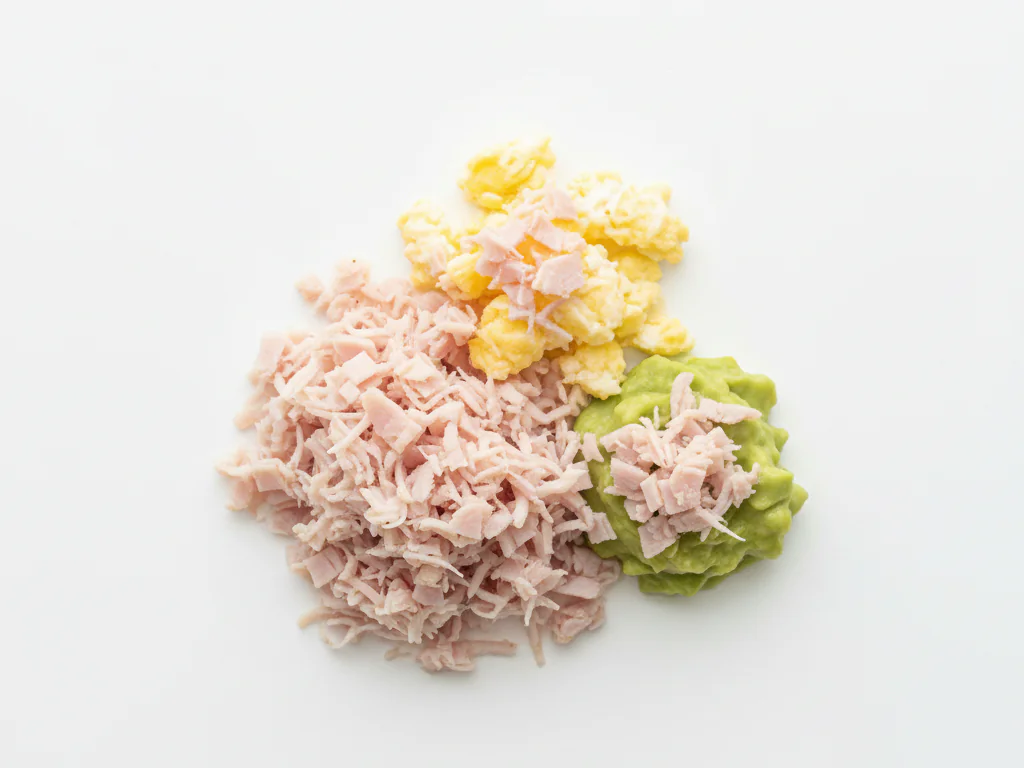
For babies 9-12 months, finely mince or shred cooked white ham into very small pieces. You can serve it as a finger food by mixing it into soft foods like scrambled eggs or mashed avocado. The texture should be easy to gum and swallow.
9 to 12 months

For babies 9-12 months, finely mince or shred cooked white ham into very small pieces. You can serve it as a finger food by mixing it into soft foods like scrambled eggs or mashed avocado. The texture should be easy to gum and swallow.

  • Shred ham with a fork or chop into rice-sized pieces
  • Combine with soft foods to prevent clumping
  • Encourage self-feeding by placing small amounts on the tray
  • Supervise closely during meals
  • Offer water sips to help with swallowing
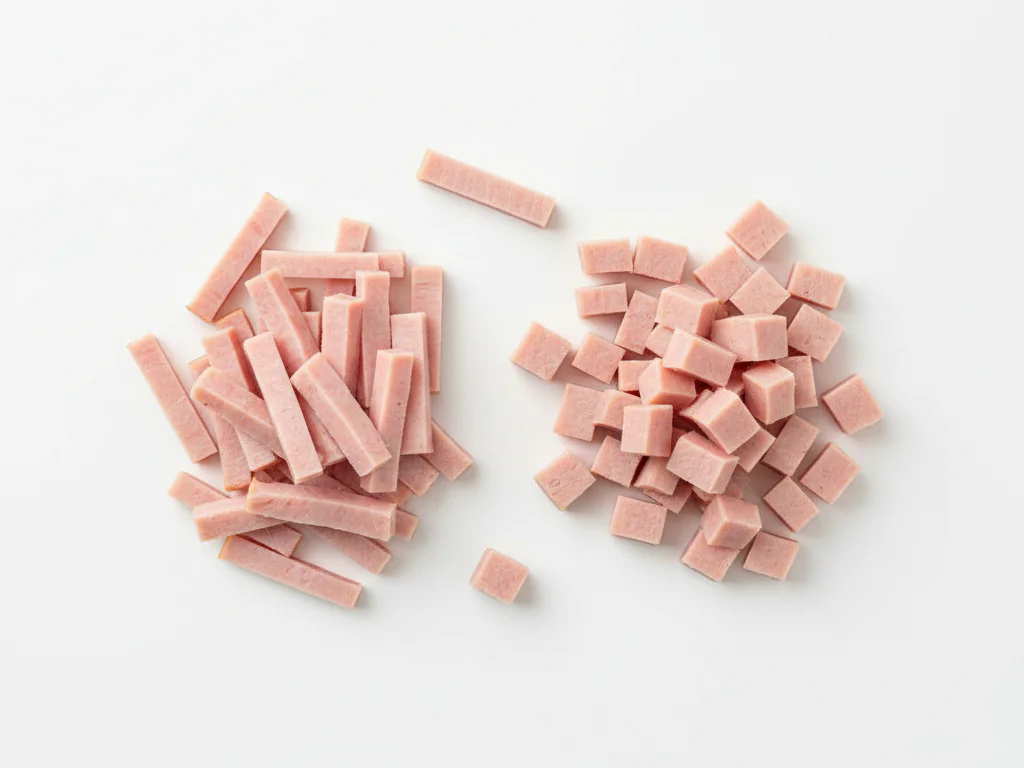
For toddlers 12 months and up, serve thin, small strips or small diced pieces of cooked white ham. You can include it in sandwiches, pasta dishes, or as part of a balanced meal. Continue to choose low-sodium options and watch portion sizes.
12 months +

For toddlers 12 months and up, serve thin, small strips or small diced pieces of cooked white ham. You can include it in sandwiches, pasta dishes, or as part of a balanced meal. Continue to choose low-sodium options and watch portion sizes.

  • Cut ham into strips no larger than your pinky finger
  • Pair with whole grains and vegetables for balanced meals
  • Limit to occasional servings due to sodium content
  • Teach chewing by modeling with your own food
  • Avoid processed ham products like 'lunch meat' slices with additives

Safety & allergens

Choking risk: Medium

White ham can be a choking hazard because it's often slippery and can form clumps in the mouth. To reduce risk, always serve it in age-appropriate textures—pureed or finely minced for younger babies, and in small, thin strips for older babies who can chew. Avoid large chunks or thick slices.

Not a common allergen

White ham is not a top allergen. As with any new food, offer it on its own and watch for any reaction.

Vitamins & minerals

White ham provides protein for growth and iron for healthy blood development, which is especially important as babies' iron stores start to deplete around 6 months.[1] It also contains B vitamins like B12 that support energy metabolism and nervous system function.[2] However, it's often high in sodium, so choosing low-sodium options and serving it occasionally is best.

Vitamins
Vitamin VITAMIN B1Vitamin VITAMIN B2Vitamin VITAMIN B3Vitamin VITAMIN B6Vitamin VITAMIN B12
Minerals
IronZincSodiumPhosphorus